Brick Fence: Pros, Cons, and What to Know Before You Build in Central Texas
A brick fence is closer to a building than a fence. It’s a masonry wall on a concrete footing, and it can outlast the house it surrounds. It’s also one of the most expensive and permanent fences you can put up. Here’s what Austin-area homeowners should know about brick fences, what drives the cost, and the alternatives that give a similar look for less.
B.C. Fence doesn’t build masonry walls. We build wood, iron, chain link, and ranch fences, so this guide gives you a straight comparison. If one of those fits better, our iron fence installation page is the closest match to the brick look.
Weighing brick against iron or wood? Get a free quote on a brick-fence alternative so you can compare real numbers.
What a brick fence is
Most brick fences are either a solid wall or a series of brick columns with panels between them. A solid wall is the most private and the most expensive. Columns with iron or wood panels between them use far less masonry and are much more common around Austin. Either way, the brick sits on a reinforced concrete footing that carries its weight, which is where much of the cost and most of the risk sits.
Advantages
- Lifespan. Well-built brick can last for generations with little more than occasional mortar work.
- Privacy and noise. A solid brick wall blocks sight and cuts road noise better than wood.
- Low upkeep. No staining, sealing, or painting, and no rot or termites.
- Fire resistance. Masonry doesn’t burn, which matters to homeowners in wildfire-prone areas west of Austin.
- Look and value. Brick matched to the house reads as part of the architecture.
Disadvantages
- Cost. Brick is typically among the most expensive fence options per foot, because of the footing, the materials, and skilled masonry labor.
- Footings and clay soil. Central Texas clay swells and shrinks with rain and drought. A brick wall on an undersized footing cracks as the ground moves, and cracked masonry is expensive to fix.
- Build time. Footings need time to cure and masonry goes up course by course, so a brick fence takes far longer than a wood or iron fence.
- Hard to change. You can’t easily move a brick wall, add a wider gate, or take it down.
- Drainage. A solid wall can trap water. It needs weep holes or gaps so runoff doesn’t pond against it.
What drives the cost of a brick fence
- Length and height of the wall, or the number of columns
- Footing size and reinforcement, set by soil and wall height
- Brick and mortar choice, including matching the house
- Caps, lighting, and decorative details on columns
- Gates, which in a brick wall need steel framing and solid anchoring
- Site access, slope, and whether rock or old concrete has to come out
Rules to check first
The City of Austin doesn’t regulate fence material except in the wildland-urban interface, but height limits still apply. A solid fence on a property line is generally limited to 6 feet, and anything over 7 feet needs a permit (see the city’s fencing regulations). A tall masonry wall, or one that also holds back soil, can fall under building or retaining wall rules, so ask the city or your engineer. HOAs often have their own masonry rules, and nearby cities set their own limits.
Alternatives that get close to the brick look
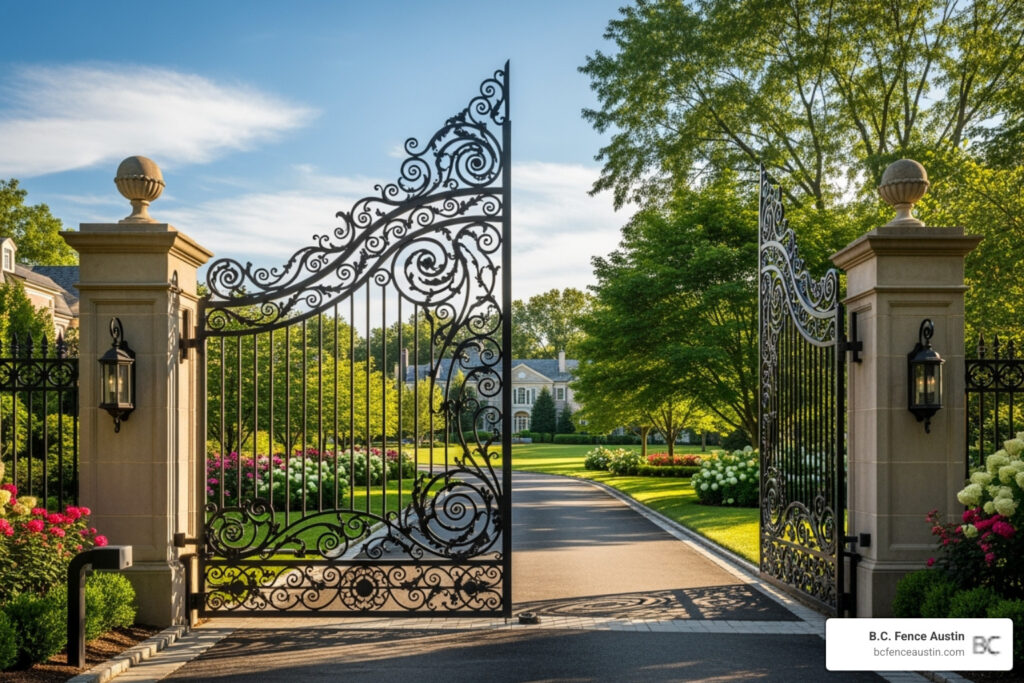
- Iron or steel fence. The classic pairing with brick. An ornamental iron fence gives the formal look and security at a fraction of a solid wall’s cost and build time. See our iron fence page.
- Cedar privacy fence with a cap and trim. Full privacy, a finished look, and it goes up in days. See our wood fence page.
- Custom fences. Mixed materials, such as wood and metal, give a modern look without masonry. See our custom fence page.
B.C. Fence is family-owned since 1996, insured and bonded, our own crews build every fence, and every job carries a 1-year warranty on labor and materials.
Free quote
Want the formal look without a masonry budget?
We’ll quote an iron, cedar, or custom fence for the same line so you can compare it against a brick bid.