
7 Least Expensive Fence Options Compared for Affordability
When it comes to securing your property without breaking the bank, choosing the right fence is crucial. The least expensive fence options offer a balance of affordability and function, perfect for homeowners who wish to improve privacy and security without sacrificing style.
Here’s a quick look at cost-effective options for fencing:
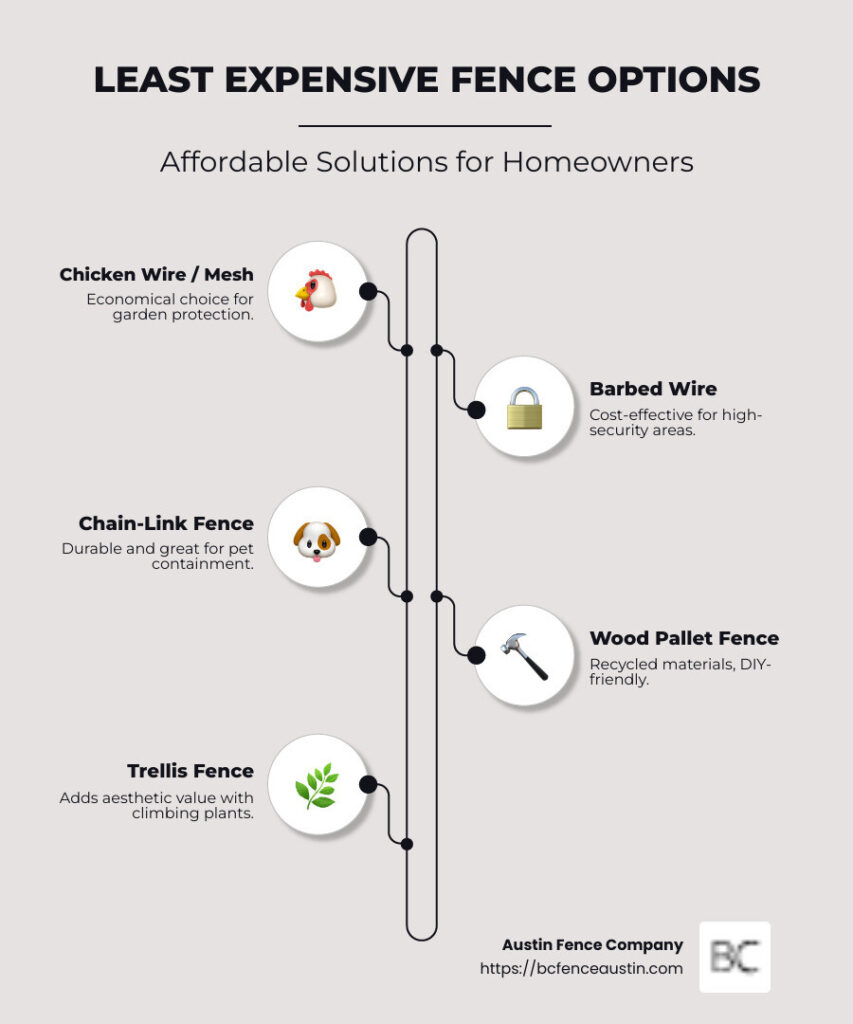
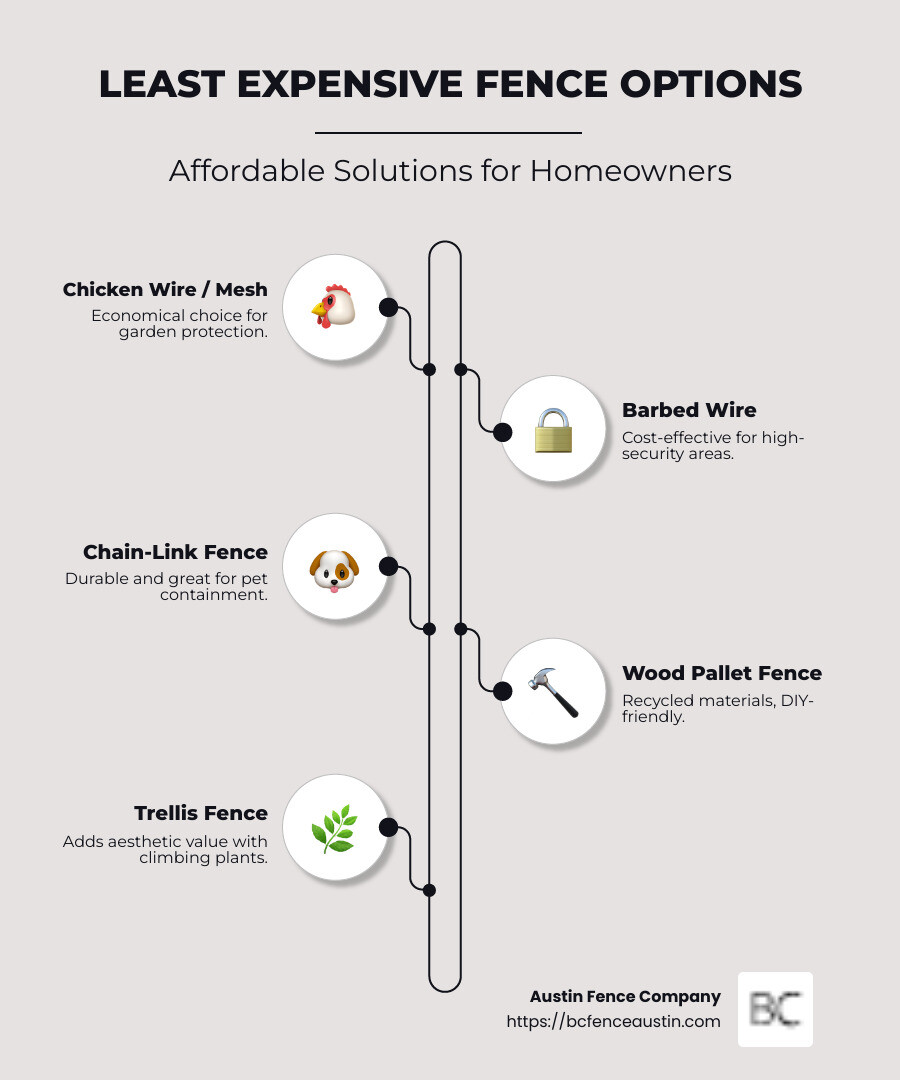
- Chicken Wire / Mesh: One of the cheapest, perfect for garden protection.
- Barbed Wire: Economical but mostly for high-security needs.
- Chain-Link: Durable and great for pet containment.
- Wood Pallet: Recycle materials and save on costs.
- Trellis: Adds charm with climbing plants.
- Picket Fence: Classic style, affordable options available.
- Stone Fence: To reuse the material for a new fence.
- Split Rail: Ideal for larger areas with minimal obstruction.
These options can not only improve your property’s appeal but also safeguard your family and pets, all while keeping harmony with the neighborhood’s style.
Least Expensive Fence Options
When you’re looking to fence your property without overspending, it’s important to consider various materials that offer both cost-effectiveness and practicality. Let’s dig into three least expensive fence options: PVC fencing, wire fence, and timber fencing.
PVC Fencing
PVC fencing is a popular choice for those seeking a low-maintenance and affordable solution. Unlike traditional wood, PVC doesn’t require regular painting or sealing, which can be a significant cost-saver over time. It’s known for its durability and resistance to the elements, making it a long-lasting option.
- Pros: Low maintenance, weather-resistant, and easy to clean.
- Cons: Higher upfront cost compared to some other options, but savings in maintenance can offset this over time.
Wire Fence
Wire fencing, including options like chicken wire and barbed wire, is among the most budget-friendly. It’s particularly useful for garden protection and livestock containment. For homeowners with large areas to cover, wire fencing provides an economical solution without compromising on security.
- Pros: Extremely affordable, easy to install, and versatile.
- Cons: Offers limited privacy and may not be suitable for all residential settings.

Timber Fencing
Timber fencing, especially when using pine or reclaimed wood, offers a classic look at a fraction of the cost of other wood types like cedar or redwood. It’s an excellent choice for DIY enthusiasts who appreciate the natural beauty of wood and are willing to invest some time in maintenance.
- Pros: Natural aesthetic, customizable, and can be inexpensive when using reclaimed wood.
- Cons: Requires regular maintenance, such as staining or sealing, to prevent rot and insect damage.
For example, a homeowner in Austin might choose a timber fence made from locally-sourced pine to match the rustic charm of their neighborhood while keeping costs low.
Each of these options provides unique benefits, so consider your specific needs and preferences when selecting the right fence for your property. Whether you prioritize aesthetics, ease of maintenance, or cost, there’s an affordable solution that fits your requirements.
1. Chicken Wire / Mesh
Chicken wire, also known as wire mesh, is the least expensive fence option that provides excellent garden protection. This type of fencing is ideal for keeping small animals out while maintaining a clear view of your garden.
Why Choose Chicken Wire?
- Affordability: Chicken wire is one of the cheapest fencing materials available. This makes it an ideal choice for budget-conscious homeowners.
- Versatility: It’s not just for chicken coops. You can use chicken wire to protect vegetable gardens, flower beds, and even small pets. Its flexibility allows it to fit any garden shape or size.
- Ease of Installation: Whether you’re a DIY enthusiast or prefer professional help, chicken wire is straightforward to install.
How to Improve Your Chicken Wire Fence
While chicken wire is functional, it may not be the most visually appealing option. However, you can improve its appearance by combining it with a decorative wooden frame. This not only improves the look but also adds stability to the fence.
For those looking to add a touch of greenery, consider planting climbing plants alongside the wire mesh. Over time, these plants can cover the fence, creating a natural and attractive boundary for your garden.
Considerations
While chicken wire is effective for garden protection, it offers limited privacy. If privacy is a priority, you might want to explore other fencing options or use chicken wire in combination with other materials for a more comprehensive solution.
In summary, chicken wire is a practical and cost-effective choice for garden protection, offering flexibility and ease of installation. It’s an excellent starting point for those seeking affordable fencing solutions.
2. Barbed Wire
Barbed wire fencing is a least expensive fence option known for its effectiveness in livestock containment. It’s a popular choice for those who need a simple yet robust barrier.
Why Choose Barbed Wire?
- Affordability: Barbed wire is one of the most cost-effective fencing solutions. This makes it an attractive option for large properties that require extensive fencing.
- Security: Its design deters both animal and human intruders. The sharp barbs make climbing over the fence difficult, providing an additional layer of protection.
- Durability: Made of galvanized steel, barbed wire is resistant to weather and rust, ensuring a long lifespan with minimal maintenance.
Applications of Barbed Wire
Primarily used in rural areas, barbed wire is ideal for containing livestock such as cattle and sheep. It keeps animals safely within designated areas and prevents wild animals from entering.
However, barbed wire is not just for farms. It can also be used in residential settings, though there are residential restrictions to consider. Some local regulations may limit or prohibit its use due to safety concerns, especially in urban areas.
Combining Barbed Wire with Other Fencing Types
For improved security, barbed wire can be combined with other fencing types. For instance, adding barbed wire to the top of a chain-link fence can significantly boost security. This combination is often used in commercial and industrial settings to prevent unauthorized access.
Considerations
While barbed wire is effective for security and livestock containment, it may not be suitable for all environments. Its sharp edges pose a risk of injury, making it less ideal for areas with children or pets. Additionally, its appearance might not be visually appealing for residential properties.
In conclusion, barbed wire is a practical and affordable solution for those needing reliable fencing for livestock containment. However, always check local regulations before installation to ensure compliance with safety standards.
3. Chain-Link Fence
Chain-link fencing is a least expensive fence option that stands out for its practicality and versatility. It’s a top choice for many homeowners and businesses looking for a reliable and budget-friendly solution.
Why Choose Chain-Link Fencing?
- Affordability: Chain-link fences are cost-effective. This makes them an economical choice for both residential and commercial properties.
- Durability: Made from galvanized steel, chain-link fences are resistant to rust and weather damage. This means they can last for many years with minimal maintenance.
- Visibility: Unlike solid fences, chain-link fences do not obstruct views. This can be beneficial for those who want to keep an eye on children or pets while maintaining a secure boundary.
Pet Containment
Chain-link fences are particularly popular for pet containment. They provide a secure barrier that prevents pets from wandering off, while still allowing them to see beyond the fence. However, some pets, especially those inclined to dig or climb, might require additional features like buried fencing or angled tops to improve security.
Customization Options
Chain-link fences offer various customization options to suit different needs and preferences:
- Color Coatings: Available in vinyl and polymer coatings, such as black, green, and brown, these options improve the fence’s aesthetic appeal while providing extra protection against rust.
- Privacy Slats: Although chain-link fences are not known for privacy, adding slats can improve both privacy and security. These slats come in various colors and can be inserted into the fence to block visibility.
Applications of Chain-Link Fencing
Chain-link fences are versatile and can be used in various settings:
- Residential: Ideal for marking property boundaries and securing yards.
- Commercial: Often used for securing business premises and construction sites.
- Recreational: Commonly found around sports fields and playgrounds.
Considerations
While chain-link fences are a practical choice, they might not provide the level of privacy some homeowners desire. Additionally, they may not be suitable for all pets, especially those that are agile or strong enough to climb or push through the fence.
In summary, chain-link fencing is a durable and cost-effective solution for those seeking a functional boundary without sacrificing visibility. It’s an excellent option for pet owners and those looking to secure their property without breaking the bank.
4. Wood Pallet Fence
If you’re on the hunt for a least expensive fence option that combines sustainability with affordability, look no further than the wood pallet fence. This choice is perfect for those who love a good DIY project and want to make use of recycled materials.
Why Choose a Wood Pallet Fence?
- Cost-Effective: Wood pallets can often be sourced for free or at a very low cost from nurseries, construction sites, or warehouses. This makes them one of the most budget-friendly fencing options available.
- Eco-Friendly: By using recycled materials, you not only save money but also contribute to environmental sustainability. Reusing pallets helps reduce waste and promotes a greener lifestyle.
- DIY-Friendly: Building a fence from pallets is a straightforward DIY project. Even those with minimal carpentry skills can create a functional and attractive fence with a little effort and the right tools.
Steps for DIY Installation
- Source Your Pallets: Look for pallets with the International Plant Protection Convention (IPPC) logo. This ensures they’re safe, having been treated to prevent pests and diseases.
- Prepare the Site: Clear and level the area where you plan to install the fence. This will make the installation process smoother.
- Assemble the Fence: Pallets can be installed either vertically or horizontally. Secure them to vertical posts using nails or screws. Decide whether you want spaces between the pallets for a more open look or a solid wall for privacy.
- Finish and Maintain: To improve the fence’s durability, consider treating the wood with a sealant or paint. This will protect against weathering and extend the life of your fence.
Considerations
- Safety: Be cautious of splinters and nails when handling pallets. Sand down rough edges and remove protruding nails to make the fence safe for both children and pets.
- Durability: While pallets are a cost-effective choice, they may not last as long as other materials. Regular maintenance, such as sealing and repairs, can help prolong their lifespan.
Applications of Wood Pallet Fences
- Gardens: Ideal for enclosing vegetable patches or flower gardens, offering a rustic charm.
- Yards: Provides a unique and customizable boundary for backyards or side yards.
- Decorative Features: Beyond functionality, wood pallet fences can serve as a backdrop for climbing plants or as a base for hanging garden decorations.
In conclusion, a wood pallet fence is an excellent choice for those looking to create a least expensive fence option with a personal touch. It’s a project that not only saves money but also adds character and sustainability to your space.
5. Trellis Fence
A trellis fence is a beautiful way to define your space while adding a touch of nature. This type of fence is perfect for those who want a balance of functionality and aesthetics, making it a standout choice among the least expensive fence options.
Why Choose a Trellis Fence?
- Affordable and Stylish: Trellis fences are generally less costly than solid wood or metal fences. They provide a stylish framework that can be customized to suit your garden’s design.
- Encourages Greenery: The open lattice design is perfect for supporting climbing plants like ivy, roses, or clematis. As these plants grow, they create a lush, green wall that improves privacy and beauty.
- Easy to Install: Trellis panels are lightweight and easy to handle. They can be attached to existing fences or posts with minimal effort, making them a great DIY project.
Steps for Installation
- Choose Your Trellis: Select a design that complements your garden’s style. Options range from simple square patterns to intricate, decorative designs.
- Prepare the Area: Clear the space where you plan to install the fence. Ensure the ground is level to make installation easier.
- Install the Posts: Use wooden or metal posts as supports. Space them according to the width of your trellis panels.
- Attach the Trellis: Secure the panels to the posts using screws or brackets. Ensure they are level and stable.
- Plant Your Climbers: Select climbing plants that thrive in your climate. Plant them near the base of the trellis, and guide their growth onto the structure.
Considerations
- Maintenance: While the trellis itself requires minimal upkeep, the plants may need regular pruning and care to keep them healthy and looking their best.
- Privacy: A trellis alone offers limited privacy. However, once your climbing plants mature, they will provide a natural screen that improves seclusion.
- Durability: Trellis fences can be made from various materials, including wood, metal, or vinyl. Choose a material that suits your climate and maintenance preferences.
Applications of Trellis Fences
- Garden Borders: Use trellis fences to define the edges of a garden or create separate zones within a larger space.
- Patio Privacy: Improve your patio’s privacy by surrounding it with a trellis fence adorned with lush greenery.
- Decorative Backdrops: Trellis fences can serve as a beautiful backdrop for outdoor seating areas or as a focal point in your garden.
A trellis fence is an ideal choice for those seeking a least expensive fence option that brings both beauty and functionality to their outdoor space. With the right plants, it can transform your garden into a vibrant, private oasis.
6. Picket Fence
The picket fence is a timeless symbol of the American Dream. It’s not just about keeping things in or out. It’s about creating a welcoming atmosphere that says, “Home sweet home.”
Why Choose a Picket Fence?
- Charming and Classic: Picket fences have been a staple in American neighborhoods for generations. Their classic look is instantly recognizable and adds a touch of nostalgia to any property.
- Decorative Styles: Available in a variety of designs, picket fences can be customized to match your home’s style. From traditional pointed tops to more ornate scalloped designs, there’s a picket fence for every taste.
- Affordable Option: As one of the more budget-friendly fencing options, picket fences are generally less expensive than solid wood or metal fences. They offer a cost-effective way to improve your home’s curb appeal.
Installation Tips
- Plan Your Layout: Before you start, sketch out your fence’s path. Decide on the height and style of your picket fence to ensure it complements your home.
- Gather Your Materials: Most picket fences come in pre-assembled panels, making them easier to install. You’ll need posts, panels, and the right tools for the job.
- Install the Posts: Set your posts firmly in the ground at regular intervals, ensuring they are level and secure.
- Attach the Panels: Once the posts are in place, attach the picket panels. Make sure they are evenly spaced and aligned for a neat finish.
- Finishing Touches: Paint or stain your fence to protect it from the elements and to achieve your desired look.
Considerations
- Maintenance: Wood picket fences require regular maintenance, such as painting or sealing, to keep them looking their best and to prevent rot.
- Durability: While wood is a popular choice, vinyl picket fences offer a low-maintenance alternative that resists weathering and doesn’t need painting.
- Privacy: Picket fences are more about aesthetics than privacy. They offer a welcoming boundary but don’t provide much seclusion.
Applications of Picket Fences
- Front Yards: A picket fence is perfect for framing your front yard, adding charm and definition without blocking the view.
- Garden Paths: Use picket fences to line garden paths, creating a quaint and picturesque setting.
- Child and Pet Safety: Ideal for keeping small children and pets safe within your yard, while still allowing them to enjoy the outdoors.
A picket fence is a delightful way to accept the American Dream while staying within budget. Its decorative styles and inviting appearance make it a favorite among homeowners looking for a least expensive fence option that doesn’t compromise on charm.
7. Split Rail Fence
The split rail fence is a classic choice for those who admire the rustic charm of ranch-style fencing. Originally used on farms and ranches, this type of fence has become a popular choice for homeowners seeking an unobstructed view while maintaining a boundary.
Why Choose a Split Rail Fence?
- Rustic Appeal: Split rail fences evoke a sense of nostalgia, reminiscent of wide-open spaces and country living. Their simple design blends seamlessly with natural landscapes.
- Cost-Effective: Compared to other fencing options, split rail fences are relatively inexpensive due to their minimal use of materials. They are an excellent choice for those looking for least expensive fence options.
- Easy Installation: With fewer components than other fences, split rail fences are straightforward to install. This makes them a great DIY project for homeowners.
Installation Tips
- Plan the Layout: Determine the length and path of your fence. Consider the natural contours of your land to achieve a pleasing aesthetic.
- Select Your Materials: Commonly made from cedar or chestnut, choose durable wood that can withstand the elements.
- Set the Posts: Dig holes for the posts, ensuring they are evenly spaced. Firmly set the posts in the ground for stability.
- Attach the Rails: Insert the rails into the post holes. The rustic look allows for some variability, so focus on achieving a consistent overall appearance.
- Finish with a Sealant: Protect your fence from weathering by applying a sealant. This step helps extend the life of your fence.
Considerations
- Maintenance: While split rail fences require less maintenance than solid wood fences, periodic sealing can help preserve the wood.
- Durability: These fences are sturdy but may not be suitable for areas with high wind or heavy snow without additional support.
- Security: Split rail fences provide a boundary but are not ideal for privacy or security. They are best suited for open spaces where aesthetics are more important than enclosure.
Applications of Split Rail Fences
- Property Boundaries: Perfect for marking property lines without obstructing the view, maintaining a sense of openness.
- Garden Edging: Use split rail fences to edge gardens, adding a rustic touch that complements the natural beauty of plants.
- Animal Enclosures: Ideal for containing livestock in rural settings, although additional measures may be needed for smaller animals.
The split rail fence is a charming and economical option for those who value simplicity and the natural beauty of their surroundings. Its unobtrusive design makes it a popular choice for homeowners seeking a least expensive fence option that improves their landscape without dominating it.
Frequently Asked Questions about Inexpensive Fences
What is the cheapest fence to build?
When it comes to least expensive fence options, chicken wire, wood pallets, and reclaimed wood are top contenders.
- Chicken Wire: This is a budget-friendly choice. It’s great for garden protection and keeping small animals out. For a DIY enthusiast, installing chicken wire is simple and cost-effective.
- Wood Pallet Fence: If you’re looking for a sustainable option, wood pallets can often be found for free or at a low cost. This is a fantastic way to recycle materials while creating a rustic look.
- Reclaimed Wood: Using reclaimed wood not only saves money but also adds character to your fence. While costs vary, sourcing wood from demolition sites or old barns can significantly reduce expenses.
Conclusion
At B.C. Fence Austin, we understand that installing a fence is not just about marking boundaries—it’s about enhancing your property’s value and appeal. We take pride in offering affordable solutions that cater to diverse needs and budgets.
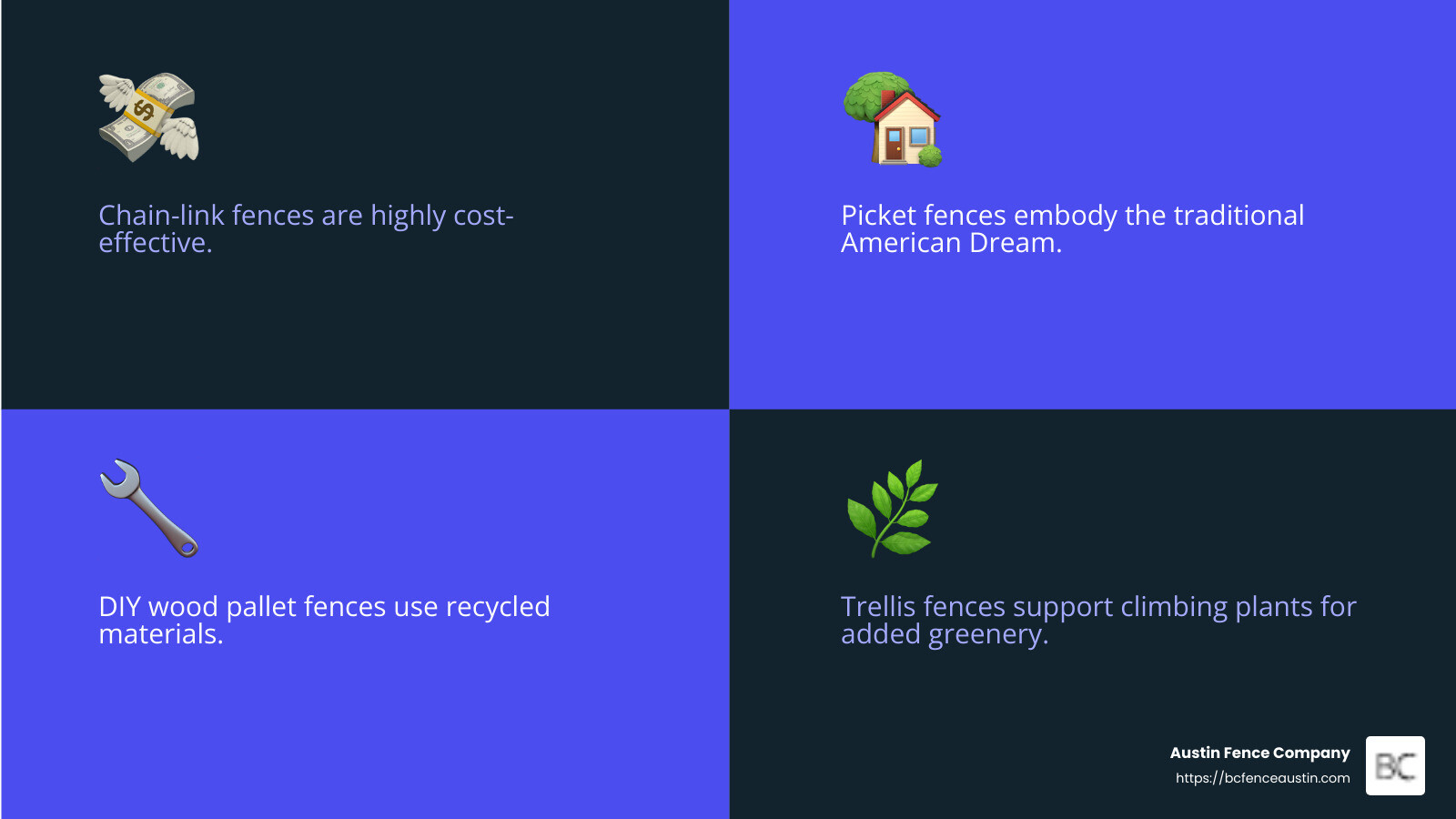
Choosing the right fence is crucial, whether you’re looking for privacy, security, or aesthetic appeal. Our wide range of options ensures you find the perfect fit for your home or business. From chain-link fences, known for their cost-effectiveness and durability, to the charming picket fences that embody the American Dream, we provide options that suit every taste and requirement.
By partnering with us, you gain access to expert advice and professional installation services that guarantee satisfaction. Our team is committed to providing high-quality, budget-friendly solutions across our locations in Cedar Park, Austin, Leander, and beyond.
Explore our services today and find how we can help you improve your property with the least expensive fence options. Whether it’s for a residential area or a commercial site, we have the expertise and resources to deliver outstanding results.
Let us assist you in making a wise investment that not only meets your fencing needs but also improves your property’s overall appeal. With B.C. Fence Austin, quality and affordability go hand in hand.