Affordable Privacy Fence Options: 6 Ways to Add Privacy Without Starting Over
Most homeowners who search for an affordable privacy fence already have a fence. The problem is that it doesn’t block the view: the pickets have shrunk and left gaps, the fence is a foot too short for the neighbor’s second story, or the back line is open chain link. Tearing it all out isn’t always the answer. Below are the six options we walk through with Austin homeowners, starting with the ones that cost the least to get the most privacy.
If you’re ready for a new privacy fence rather than an upgrade, start with our wood and cedar privacy fence installation page, which covers styles, heights, and what goes into a build.
Want someone to look at your fence line and tell you which option fits? Ask for a free privacy fence quote and we’ll walk it with you.
First, find where the privacy is leaking
Stand where you sit outside and look for three things. Gaps you can see through between boards. Spots where the fence is too low for the sight line, usually toward a neighbor’s deck or upstairs window. And open sections, such as chain link along the back or a ranch-style run on the side. Each one has a different fix, and most yards only have one or two of them. Fixing those sections is almost always cheaper than replacing every foot of fence.
1. Board-on-board when the pickets have gaps
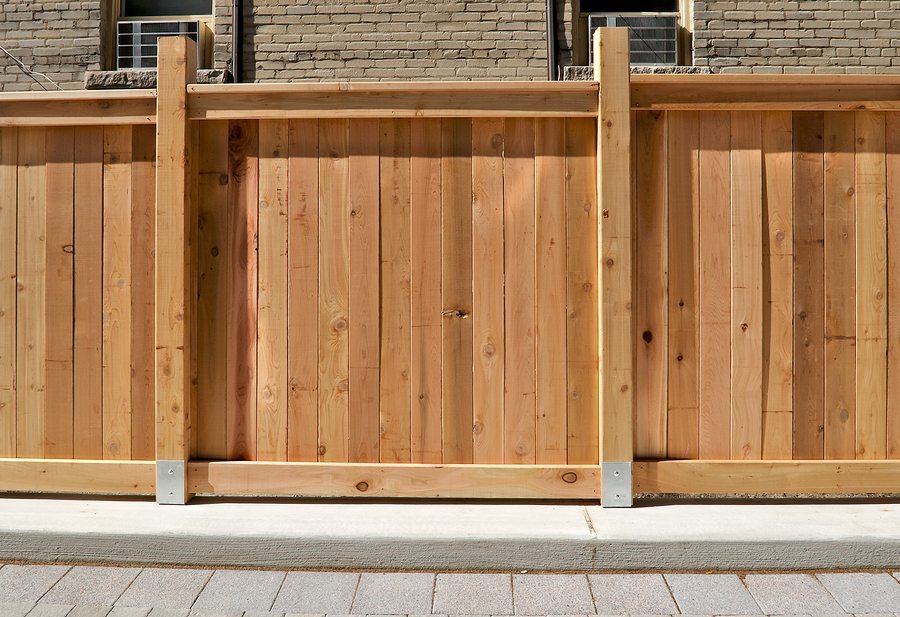
Wood pickets shrink as they dry, and a fence built with boards butted side by side can open up gaps within its first year or two. Board-on-board (also called shadowbox with an overlap) puts a second row of pickets over the seams so there’s no straight line of sight even after the wood moves. If your posts and rails are sound and the pickets are what’s failing, re-picketing in board-on-board style gives you a nearly solid face without paying for new posts.
The catch is the posts. If they’re leaning, rotted at the ground line, or heaving in clay, new pickets won’t last. Our repair vs. replacement break-even guide explains how we judge that.
2. Add height, within the rules
Going from a 6-foot fence to a taller one is often the single biggest privacy gain. In the City of Austin, a solid fence on a property line is limited to 6 feet measured from natural grade, or 7 feet where the grade changes at least 1 foot along that line. Any fence over 7 feet needs a permit, and a fence over 6 feet along a public right-of-way (not an alley) needs city authorization. Fences in a floodplain need a permit at any height. The city’s fencing regulations page has the details, including when up to 8 feet is allowed with neighbor consent.
Cedar Park, Round Rock, Leander, Georgetown, and the other towns around Austin set their own limits, and many HOAs are stricter than any city. Get the height in writing before anyone orders material.
3. Slats in a chain link fence you want to keep
If the back line is sound chain link, privacy slats woven into the mesh block most of the view for a fraction of what a new wood fence costs. They don’t make chain link fully solid, and they add wind load, so the line posts need to be in good shape. This works best on the back or side lines you don’t look at every day.
4. Rebuild only the side that matters
Privacy usually matters on one or two sides: the run facing the neighbor’s patio, the street side of a corner lot, or the line behind the pool. A common affordable plan is a 6-foot cedar privacy fence on those runs and a lower-cost chain link or ranch fence where privacy doesn’t matter. You get privacy where you live and spend less on the lines nobody looks at.
5. Keep sound posts, replace the rest
Posts set in concrete are the most labor-heavy part of any fence. When a fence has steel posts in good condition, or wood posts that are still solid and plumb, building new rails and pickets on them can bring the cost down. We check every post before recommending this, because a new face on a failing frame is money spent twice.
6. A fence and plants working together
A ranch rail or wire fence with an evergreen hedge planted along it gives privacy that grows over time. It’s the lowest-cost option up front, but it takes a few seasons to fill in, and the hedge needs watering through Central Texas summers. It’s a good fit for large lots where a solid fence along the whole line would be expensive.
What drives the cost of a privacy fence
Every privacy fence quote comes down to the same handful of factors:
- Linear feet. The biggest single factor. Rebuilding one side instead of three changes the number more than anything else.
- Height. Taller fences need longer posts, deeper holes, and more material.
- Board style. Board-on-board uses more pickets than side-by-side.
- Material. Cedar and pine, and the post type (wood or steel).
- Gates. Each gate adds hardware, framing, and labor.
- Tear-out and ground. Removing the old fence, and digging in rock, which is common west of I-35.
When affordable means a new fence
If more than about a third of the posts are failing, upgrades stop being the affordable choice. At that point a new fence costs less over the next several years than patching an old one. B.C. Fence is family-owned since 1996, our own crews build every fence (no subcontractors), we’re insured and bonded, and every job carries a 1-year warranty on labor and materials.
Free quote
Not sure which option fits your yard?
We’ll walk your fence line, show you where the privacy is leaking, and quote the fix that makes sense, whether that’s one side or the whole fence.