Ranch Fencing Unleashed: Exploring Your Options
Understanding Ranch Fencing: Protection, Value, and Function
When it comes to ranch fencing options, variety truly is the spice of life. Each type serves a unique purpose, offering different benefits depending on your specific needs:
Ask any rancher about their most valuable tools, and good fencing will always make the list. Your fence isn’t just a boundary marker—it’s the silent guardian of your livestock investment, keeping your animals safe while keeping unwanted visitors (both human and animal) at bay.
Whether you’re running cattle across hundreds of acres or keeping a few horses on a small hobby farm, your fencing choice affects everything from daily operations to your property’s market value. In fact, quality ranch fencing typically returns 50-70% of your investment immediately through increased property value.
“Good ranch fencing is the backbone of your operation,” as industry expert Jesse Sumrak puts it. “It’s what keeps your prized cattle from wandering onto the neighbor’s land.”
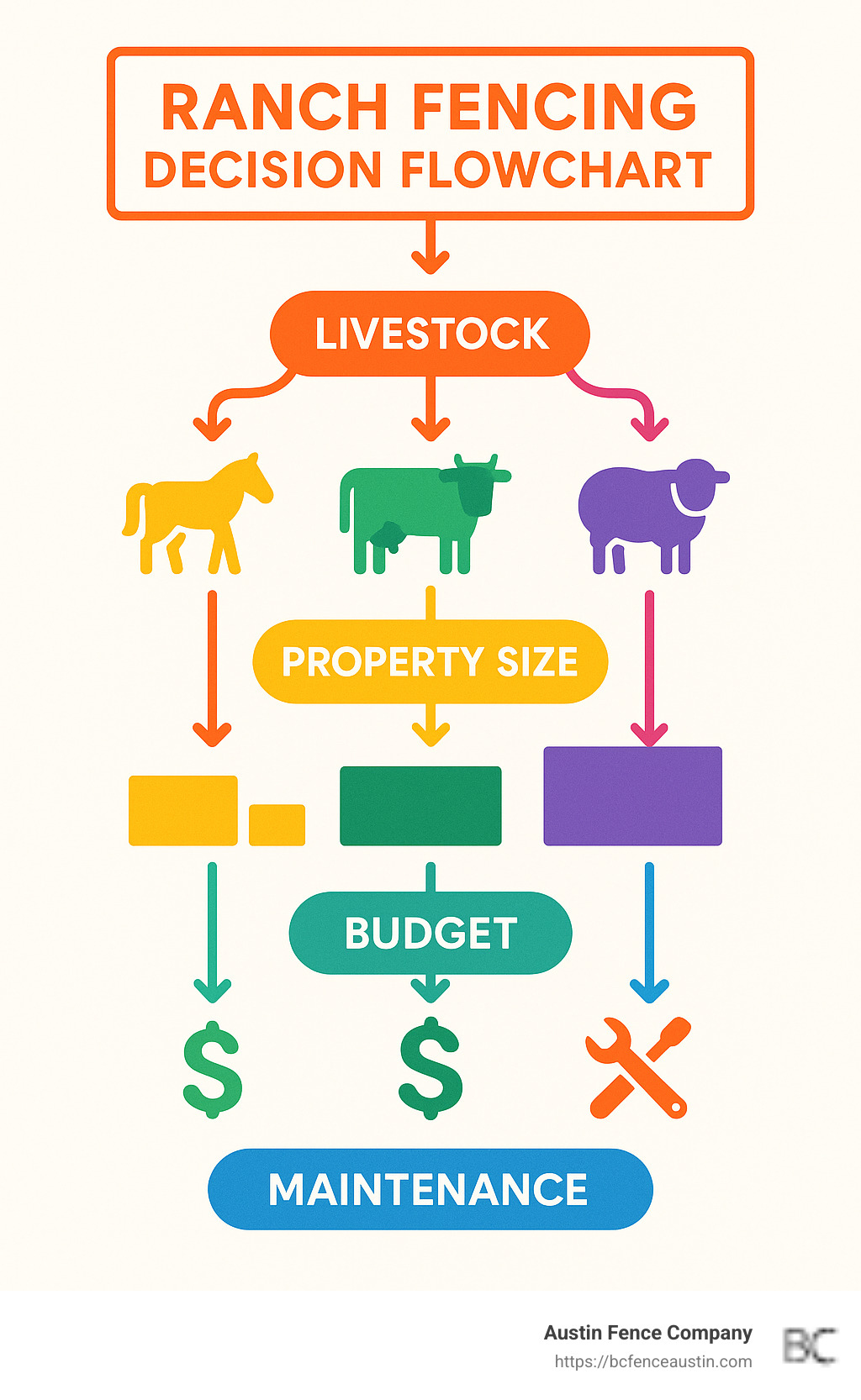
Choosing the right fence means thinking about several key factors. Livestock type matters tremendously—what works for horses might spell disaster for goats. Your property’s terrain will influence both material selection and installation costs. Climate conditions in your area might make certain materials impractical, while your budget constraints will determine both initial investment and long-term maintenance commitments. And don’t forget aesthetics—the right fence improves your ranch’s appearance and character.
This guide will walk you through today’s best ranch fencing options, helping you balance function, durability, and cost to find the perfect solution for your property.
Why Ranch Fencing Matters: Safety, Value & Curb Appeal
When you’re running a ranch, your fence isn’t just a boundary—it’s the foundation of your entire operation. Good fencing does so much more than mark where your property ends and begins.
Livestock Security and Management
Nothing causes a rancher more stress than finding animals have escaped. Quality ranch fencing options prevent these heart-stopping moments while keeping your livestock safe from traffic hazards. A properly designed fence system also makes daily management easier, allowing you to rotate grazing areas and separate animals when needed.
“The peace of mind that comes with knowing your animals are secure is worth every penny spent on quality fencing,” says longtime rancher Maria Thompson. “I sleep better knowing my horses won’t end up on the highway.”
Property Value Improvement
Smart investments pay you back, and ranch fencing certainly qualifies. Studies consistently show that well-designed, properly installed ranch fencing delivers a 50-70% return on investment through increased property value. For equestrian properties especially, attractive, functional fencing isn’t optional—it’s essential for maximizing your property’s worth.
Boundary Clarity and Neighbor Relations
There’s wisdom in the old saying that “good fences make good neighbors.” Clear boundaries prevent misunderstandings before they start. When property lines are well-marked with quality fencing, you establish respect and reduce the chance of disputes that can sour neighborly relationships for years.
Predator Control
In areas where predators roam, proper fencing provides crucial protection for vulnerable livestock. Coyotes, wolves, and other predators can devastate a flock or herd overnight without adequate barriers. The right ranch fencing options create a protective shield around your animals, preventing costly losses and heartbreaking findies.
Aesthetic Appeal
Let’s be honest—your ranch’s appearance matters. Whether you’re planning to sell someday or simply take pride in your property, fencing contributes significantly to the overall impression your ranch makes.
“A well-designed fence can be the crown jewel of your ranch, setting the tone for your entire property,” notes industry expert Jesse Sumrak. From classic wooden rail fences framing a horse pasture to sleek modern options that complement your ranch house, your choice of fencing makes a statement about your operation.
The right fence also reduces potential liability issues. When your property is clearly marked and secured, you minimize the risk of trespassing incidents or accidents that could lead to costly legal problems.
Your fence is an investment in safety, value, and peace of mind—three things no rancher can put a price on.
Ranch Fencing Options: Materials, Styles & Key Differences
When it comes to ranch fencing options, there’s no perfect solution for every situation. Each material brings its own strengths to the table—if you’d like a deeper dive into fencing in general, check out the Fence article for a quick historical overview—and your choice will depend on your specific needs, budget, and aesthetic preferences.
Wood & Traditional Ranch Fencing Options
Wood fencing continues to charm ranchers with its timeless appeal and natural beauty. Cedar split rail fencing offers excellent resistance to rot and insects, typically lasting 15–20 years when properly maintained. Treated pine provides a more budget‑friendly alternative while still delivering solid durability when protected against moisture.
Most ranchers choose between 2‑rail, 3‑rail, or 4‑rail configurations, with the higher rail counts providing better containment for smaller animals like sheep or goats.
“Wood fences are like vintage trucks,” jokes one local rancher. “Gorgeous to look at, but you’ll spend plenty of weekends maintaining them.” That maintenance typically includes staining or sealing every 2–3 years and replacing the occasional damaged board.
Modern Metal Ranch Fencing Options
For ranchers prioritizing durability over traditional aesthetics, metal fencing delivers exceptional strength and longevity. Pipe fencing, constructed from galvanized steel, stands up remarkably well to the challenges of containing cattle and other large livestock.
Steel board fencing offers an interesting middle ground – the classic look of wood rails with the lasting power of steel. These options resist warping, rotting, and even the most determined livestock chewing habits.
While metal fencing comes with a higher upfront cost, its 20–30 year lifespan and minimal maintenance requirements often make it more economical in the long run. Many ranchers find the peace of mind worth the investment.
For specialty metal fencing solutions, you might want to explore products like fixed‑knot wire, which provide exceptional strength for high‑pressure areas.
Vinyl Ranch Fencing Options
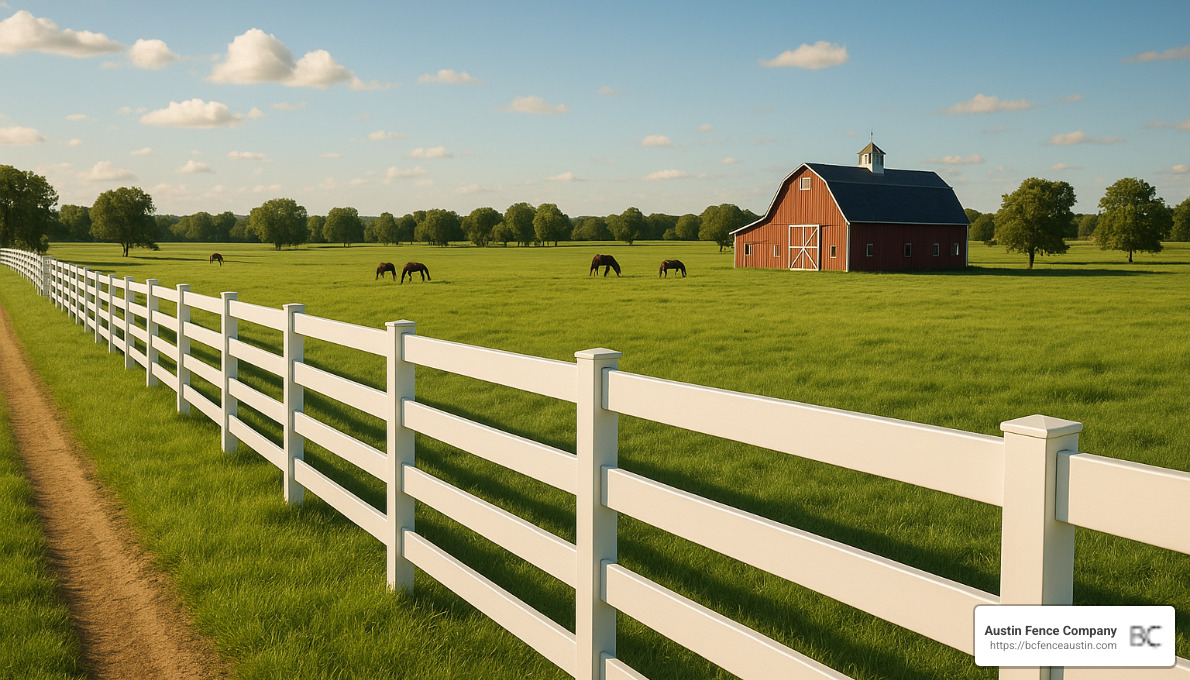
Vinyl ranch fencing options have surged in popularity for good reason – they combine head‑turning good looks with remarkably low maintenance requirements. Available in traditional 2‑rail, 3‑rail, or 4‑rail styles, vinyl fencing convincingly mimics the appearance of wood while eliminating most of the upkeep headaches.
Most vinyl fencing comes in white or tan, though black vinyl options with UV inhibitors have become increasingly available for those seeking a more dramatic look. Quality vinyl products include internal reinforcement to prevent sagging and special UV protection to resist yellowing or fading in the harsh Texas sun.
“I installed vinyl fencing five years ago,” shares a Cedar Park horse owner, “and besides an occasional pressure washing, I haven’t had to touch it. No painting, no splinters, no rotting posts.”
Many manufacturers back their confidence with limited lifetime warranties. While DIY installation kits exist, professional installation ensures proper tensioning and alignment for best results.
Wire & High‑Tensile Ranch Fencing Options
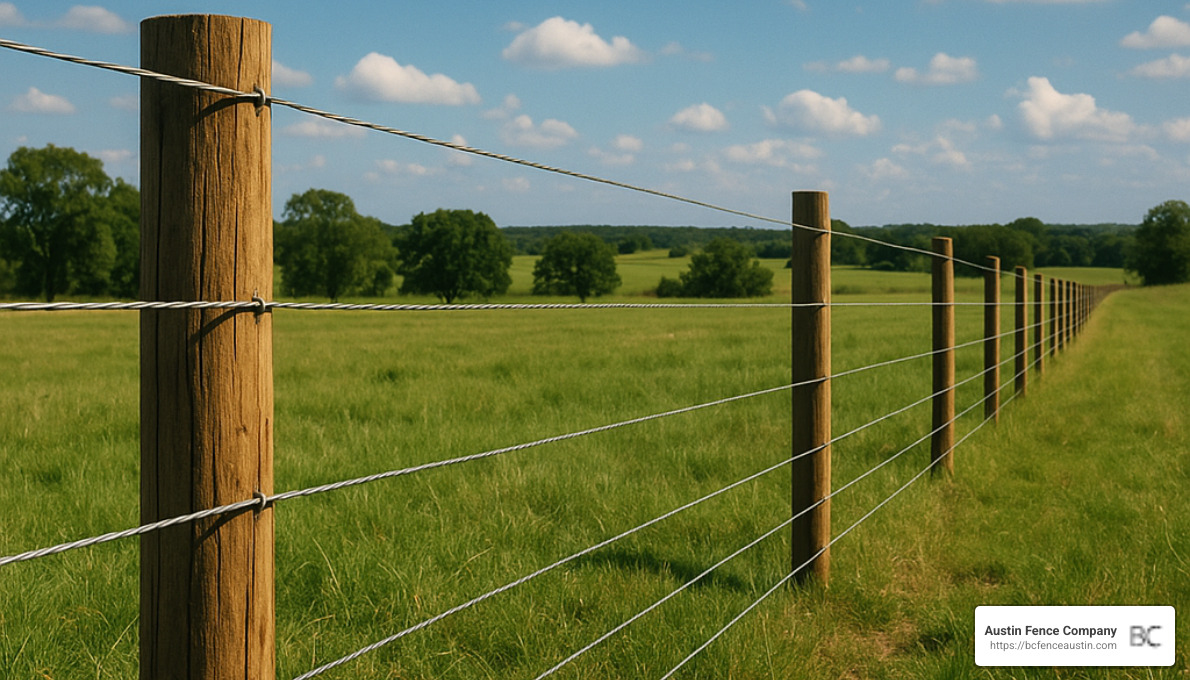
For large properties where budget matters, wire ranch fencing options provide economical and effective solutions. Traditional barbed wire remains popular for cattle containment, typically using 3–5 strands depending on your security needs.
Woven wire offers better containment for smaller animals, creating a mesh barrier that prevents escape. High‑tensile wire has revolutionized ranch fencing with its superior strength and tension memory, allowing wider post spacing and reducing overall costs.
Cattle panels – rigid, pre‑fabricated sections typically measuring 50″ tall by 8′ wide – provide exceptional strength for containing larger livestock. Made from 5‑gauge galvanized steel, these panels resist damage even from determined animals.
Wire fencing stands out for its cost‑effectiveness and impressive longevity, with properly installed high‑tensile systems often lasting 25+ years with minimal maintenance.
Specialty & Hybrid Solutions
Some ranching situations call for custom approaches that address unique challenges. Water gaps allow fencing to cross seasonal creeks without being damaged during flooding. Combination fences might pair wood or vinyl rails with wire mesh for containing both large and small animals.
For those wanting to blend functionality with curb appeal, decorative cattle panels offer an attractive solution for visible areas of your property. Solar‑powered gate openers add convenience, allowing you to enter or exit without leaving your vehicle.
Here in Central Texas, we often recommend blended solutions that balance practical containment needs with aesthetic considerations. The right fence not only secures your livestock but also improves your property’s overall appearance and value.
Matching Fence to Livestock, Terrain & Climate
Choosing the right fence isn’t just about looks or price—it’s about meeting the specific needs of your animals and your land. Let’s break down what works best for different situations.
Best Fence for Cattle
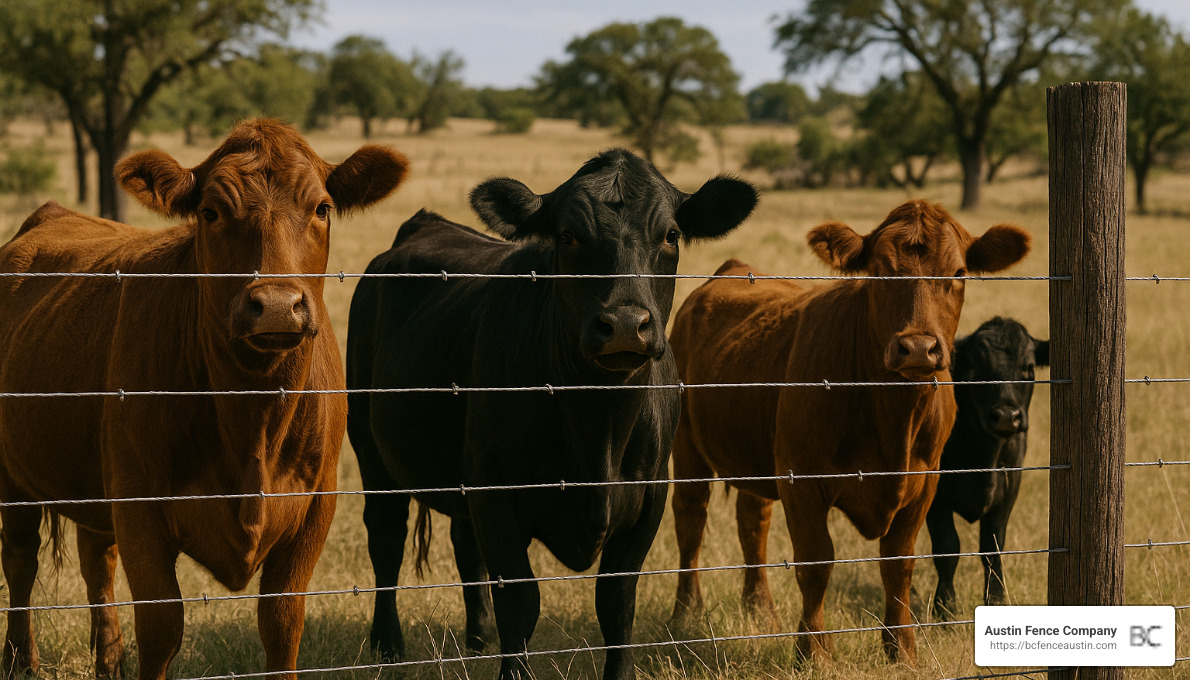
Cattle are powerful creatures that need sturdy containment. Barbed wire fencing with 4-5 strands works well for most cattle operations, with posts spaced 8-12 feet apart. High-tensile wire offers excellent strength while requiring fewer posts, making it economical for larger properties. For areas where cattle pressure is highest—like corrals and working areas—pipe fencing provides best durability.
“The corners make or break a cattle fence,” as one rancher told us. We always recommend reinforcing corner posts and gates where cattle tend to push and rub the most.
Best Fence for Horses
Horses present unique challenges because they’re flight animals with thin skin and curious natures. Vinyl rail fencing offers excellent visibility and won’t splinter or create sharp edges that might injure your horses. Steel board fencing combines the classic look of wood with metal’s durability, giving you the best of both worlds.
For a more budget-friendly option, woven wire with a top rail provides visibility while preventing horses from leaning over. Keep fence height at least 4.5-5 feet to discourage jumping, and always avoid barbed wire for horses—one panicked bolt could lead to devastating injuries.
Best Fence for Sheep & Goats
These escape artists require special consideration! Woven wire with 4″x4″ or smaller mesh prevents even the smallest kids and lambs from squeezing through. Cattle panels work well too, with their graduated spacing (tighter at the bottom, wider at the top).
Adding a low electric wire around the perimeter can discourage digging, which is particularly helpful with goats who seem to view fences as mere suggestions. As one sheep farmer in Georgetown told us, “If your fence can hold water, it might—just might—hold a determined goat.”
Best Fence for Pigs
Pigs combine intelligence with powerful snouts made for rooting, creating unique fencing challenges. Hog panels with reinforced lower sections stand up to their strength, while buried apron wire extending horizontally underground prevents them from rooting under your fence.
Many of our Austin-area customers have had great success with electric strands placed at nose height. We’ve also implemented “apron-style fencing” for clients in Pflugerville, where the bottom of the fence bends inward to stop determined diggers.
Predator & Wildlife Considerations
Central Texas ranchers face everything from coyotes to wild hogs. If predators are a concern, consider adding electric outriggers (wires extending outward at the top) to prevent climbing. For areas with larger predators, taller fencing (7-8 feet) may be necessary.
Smaller mesh sizes keep out smaller predators, while wildlife crossings at strategic points allow native animals to move through your property without damaging your fence. This balance of protection and conservation has been particularly successful for our clients with larger properties in the Hill Country.
Climate and terrain also play crucial roles in fence selection. For steep slopes, high-tensile wire offers flexibility, while rocky soil might require specialized post-driving equipment or different installation techniques. In flood-prone areas near creeks and rivers, special water gaps or breakaway fence sections can prevent your entire fence from washing away during heavy rains.
Costs, Lifespan & Maintenance at a Glance
When it comes to ranch fencing, the sticker price is just the beginning. Smart ranchers look at the full picture—what you’ll pay now and what you’ll spend over the fence’s lifetime.
“The cheapest fence often becomes the most expensive over time,” says one longtime rancher from Dripping Springs. “I learned that lesson the hard way.”
Looking at these numbers, it’s clear why many Central Texas ranchers are moving toward vinyl and high-tensile options. While wood offers that classic ranch look we all love, the maintenance hours add up faster than calves at feeding time.
Maintenance Best Practices
Taking care of your fence doesn’t have to be complicated. A little attention goes a long way toward extending its life and protecting your investment.
The most important thing is simply walking your fence line regularly. After big storms, take a drive or ride to check for downed trees or branches. Spring and fall are perfect times for thorough inspections when you can spot issues before they become expensive problems.
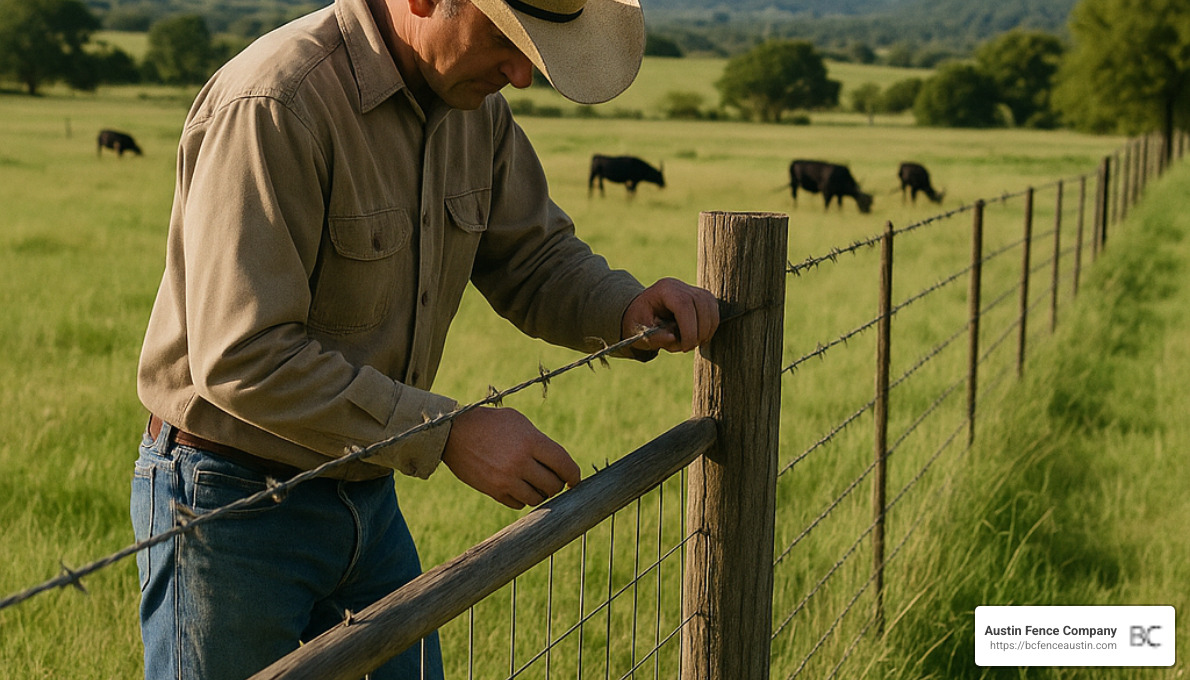
For wire fencing, tension is everything. A sagging fence isn’t just unsightly—it’s ineffective. We recommend checking tension seasonally, especially after temperature swings which can cause expansion and contraction.
Wooden fences need the most love. Treat them like your favorite leather boots—regular care keeps them looking good and working right. A fresh coat of stain every few years protects against our harsh Texas sun and humidity.
Vinyl fencing is nearly maintenance-free, but don’t completely forget about it. An annual cleaning with soapy water keeps it looking fresh, and checking for loose posts takes just minutes.
One maintenance tip we share with all our Austin-area clients: control vegetation around your fence line. Those beautiful wildflowers look nice, but keeping a 3-foot clear zone around your fence prevents moisture damage and makes inspections easier.
“Remember,” as one Georgetown rancher told us, “fence maintenance is like flossing—a little regular attention prevents painful and expensive problems down the road.”
For professional help maintaining your ranch fencing, our team at B.C. Fence offers inspection services and maintenance plans custom to your specific ranch fencing options. We’ve seen it all in our years serving Central Texas ranchers—from cedar posts that have stood for decades to brand-new installations that need adjusting.
Installation, Regulations & FAQ
When it comes to installing your ranch fence, there’s a lot to consider beyond just picking the right materials. Let’s talk about the practical aspects of getting your fence up and running, and answer some common questions that might be on your mind.
Professional Installation vs. DIY
While the DIY route can save you money on labor, professional installation often pays for itself in peace of mind and longevity. Many ranchers start with grand DIY plans only to call in the pros halfway through!
“I thought I’d save a bundle installing my own fence,” laughs Tom, a rancher near Leander. “Three weekends later, I had six posts in and a very patient wife wondering when I’d admit defeat.”
If you’re considering the DIY approach, keep these essentials in mind:
- Your fence posts should generally be buried at least 1/3 of the fence height underground
- Post spacing typically runs 8-12 feet apart, depending on your fence type
- Proper corner bracing is non-negotiable for wire fences, or you’ll soon have a sagging mess
Here in Central Texas, our soil conditions can be particularly challenging – from rock-hard limestone to clay that expands and contracts dramatically with moisture. Our installation teams are familiar with these local challenges and come equipped with the right tools for the job.
Do I Need a Permit for Ranch Fencing Options?
The short answer? It depends on your location. Throughout the Austin area, permit requirements vary widely.
In general, your fence height is the biggest factor determining whether you’ll need a permit. Most agricultural fencing under 6 feet tall doesn’t require permits in rural areas, but urban and suburban properties often have stricter rules.
Local considerations that might affect your permit needs:
- Setback requirements from roads and property lines
- Corner lot visibility rules to prevent traffic hazards
- HOA restrictions that may be more stringent than county codes
- Easement limitations that restrict building on certain portions of your property
We’re happy to help steer these requirements for properties throughout Cedar Park, Liberty Hill, and the greater Austin area. It’s always better to check before building than to face expensive corrections later!
How Often Should I Inspect My Fence?
Think of your fence inspection schedule like oil changes for your truck – regular maintenance prevents bigger problems down the road.
We recommend a thorough fence inspection twice a year – ideally in spring and fall. Spring checks catch winter damage before summer heat sets in, while fall inspections prepare your fence for winter weather.
After severe weather events like flooding or high winds, it’s smart to walk your fence line even if it’s not inspection time. A single broken section can quickly lead to escaped livestock.
For wire fences, check tension seasonally. Wire expands in heat and contracts in cold, so adjustments throughout the year keep your fence functioning properly. A properly tensioned fence should give slightly when pressed but snap back immediately.
When Should I Repair vs Replace?
This is the fence equivalent of the “fix the old truck or buy new” dilemma that every rancher faces eventually.
Consider replacement when:
- Your fence has reached 75-80% of its expected lifespan
- Repairs are becoming more frequent and widespread
- Multiple posts are rotting, leaning, or broken
- The cost of repairs approaches 30-50% of complete replacement
“One repair is maintenance, constant repairs is just throwing good money after bad,” as one of our longtime customers puts it.
For wood fences, check posts at ground level for rot by poking with a screwdriver. If it easily penetrates the wood, that post is compromised. For wire fences, excessive rust or multiple breaks suggest it’s time for a full replacement.
Partial replacement is also an option. Many ranchers replace their fencing in phases, starting with the most visible or problematic sections first.
For expert advice on your specific situation, our ranch fence specialists can help assess whether repair or replacement makes the most sense for your property and budget.
Conclusion
Choosing the right ranch fencing options isn’t just about keeping animals in—it’s about protecting your investment, enhancing your property’s value, and creating a safe environment for your livestock. The perfect fence balances your specific needs with practical considerations like maintenance requirements and budget constraints.
Throughout this guide, we’ve explored how different fencing materials serve different purposes. From the classic appeal of wood rail fencing to the durability of steel pipe, from low-maintenance vinyl to cost-effective wire options—each has its place on the modern ranch.
Quality fencing is an investment that typically returns 50-70% of its cost immediately in added property value. Beyond the financial benefits, the right fence provides peace of mind knowing your animals are secure and your boundaries are clearly defined.
For many ranchers in Central Texas, a combination approach works best—perhaps attractive vinyl rail fencing near the home and entrances, with more economical high-tensile wire for back pastures. This balanced approach maximizes both aesthetics and functionality while keeping costs reasonable.
When planning your fencing project, don’t forget to check local regulations, consider your terrain challenges, and match your fence type to your specific livestock needs. A fence that works beautifully for horses might be entirely inadequate for goats or pigs.
Here at B.C. Fence, we understand the unique challenges Central Texas ranchers face—from rocky Hill Country terrain to the hot summer sun that tests every material. We’re proud to help ranch owners throughout Austin, Cedar Park, Leander, and surrounding communities find fencing solutions that truly stand the test of time.
Whether you’re starting from scratch or upgrading existing fencing, we’re here to help you steer your options and install a fence that serves your ranch for years to come. For more information about our Ranch & Farm Fence Services, reach out to our team for a personalized consultation.
The right fence doesn’t just contain your livestock—it defines your ranch’s character, protects your investment, and can even make daily operations more efficient. It’s worth taking the time to get it right.