From Rust to Robust: Restoring Your Wrought Iron Fence
Reviving Your Fence’s Timeless Elegance
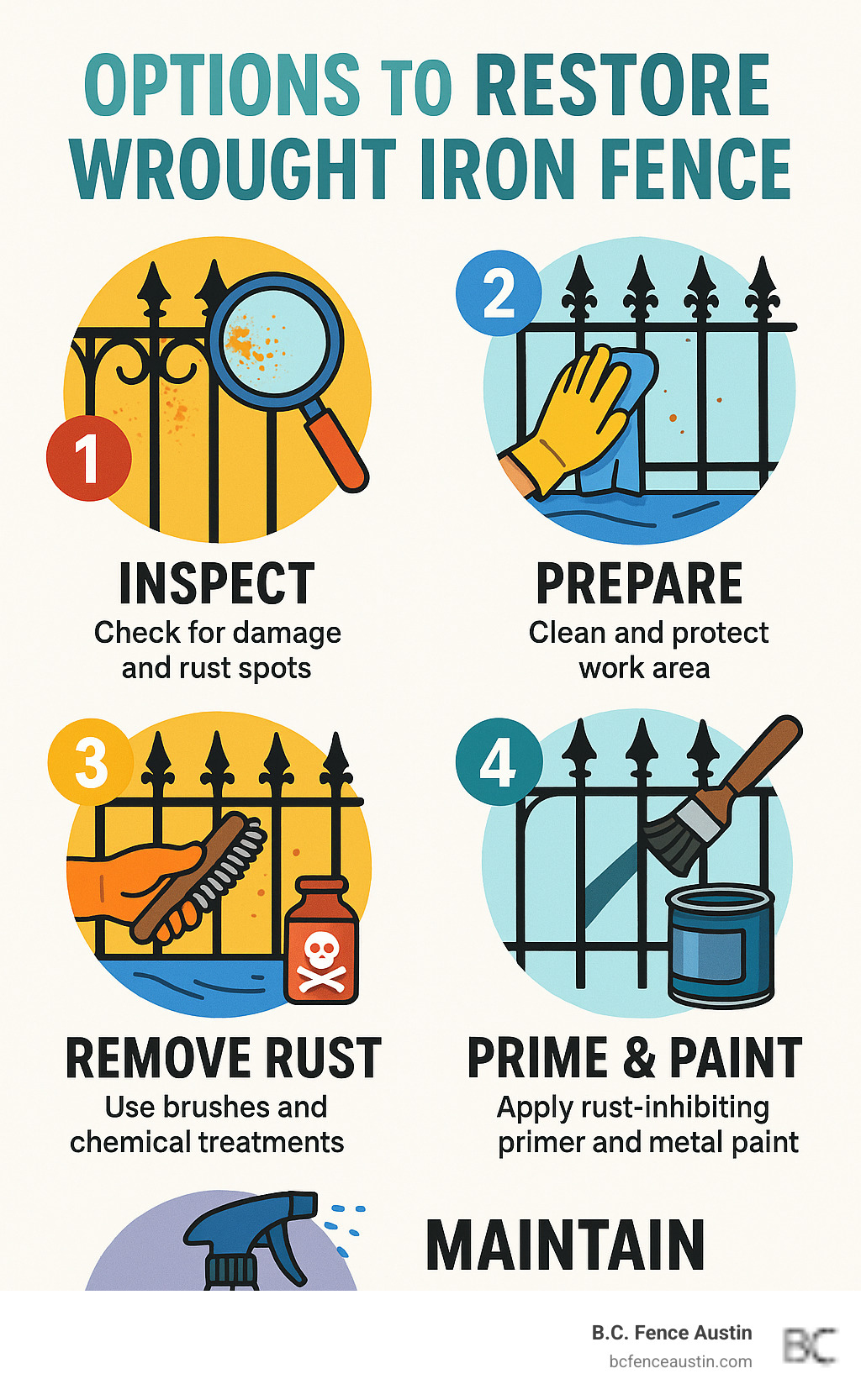
The options to restore wrought iron fence include DIY methods for minor repairs and professional restoration for extensive damage. Here are your main restoration choices:
- Manual rust removal – Wire brushes, sandpaper, and scrapers for surface rust
- Chemical rust treatment – Commercial rust removers or natural solutions (vinegar and lemon juice)
- Power tool cleaning – Angle grinders and disc sanders for heavy rust removal
- Complete refinishing – Rust-inhibiting primer followed by metal-specific paint
- Professional restoration – Sandblasting, welding repairs, and powder coating
- Preventive maintenance – Regular cleaning and protective coatings
Your wrought iron fence once added elegance and sophistication to your property. But now rust spots and peeling paint make it look tired and worn. Don’t worry – that beautiful fence can be restored to its former glory.
As one fence restoration expert puts it: “Wrought iron is a very resilient and long-lasting material and any fencing, stairs or railings that are made using this material can last for a number of years, with careful and regular maintenance.”
Whether you’re dealing with light surface rust or more serious deterioration, you have several effective restoration options. The right choice depends on the extent of damage, your budget, and your comfort level with DIY projects.
The good news? Most wrought iron fences can be successfully restored rather than replaced, saving you significant money while bringing back that classic curb appeal that makes your property stand out.
Important options to restore wrought iron fence terms:
Is It Time for a Restoration? Key Signs of Wear and Tear
Your wrought iron fence has been standing guard for years, but even the strongest materials need attention over time. The key is knowing when to act – and what options to restore wrought iron fence make the most sense for your situation.
Think of fence inspection like a health checkup. You want to catch problems early, when they’re easier and less expensive to fix. Walk along your fence line and look for these telltale signs that restoration time has arrived.
Rust spots are usually the first red flag you’ll notice. Don’t let their small size fool you – rust spreads like wildfire once it gets started. Those innocent-looking orange patches will eat through your fence’s metal if you ignore them. Pay special attention to joints and corners where moisture loves to hide.
Flaking or bubbling paint tells a story of moisture that’s already won the battle against your fence’s protective coating. When paint starts peeling away, it’s like removing your fence’s raincoat during a storm. The exposed metal underneath becomes a sitting duck for rust and corrosion.
You might also spot a chalky residue on the surface, especially if you have galvanized steel fencing. This white, powdery stuff means the protective zinc coating is breaking down. While it’s not rust yet, it’s definitely a warning sign that trouble is coming.
Structural integrity issues are more serious concerns. Bent or loose posts mean your fence isn’t just looking bad – it’s potentially unsafe. Whether from ground settling, storm damage, or rust weakening the metal, wobbly posts need immediate attention.
Wobbly gates or sections create both security and safety problems. A gate that doesn’t close properly defeats the whole purpose of having a fence. Loose sections can be dangerous, especially around children and pets.
The smart approach? Inspect your fence at least twice a year – once in spring and once in fall. Also take a look after any severe weather events like hail storms or high winds. Early detection means you can often use simpler restoration methods instead of major repairs.
For more guidance on keeping your fence in great shape year-round, check out our Top 6 Iron Fence Maintenance Tips. A little attention now saves a lot of headaches later.
Your Complete Guide to the Best Options to Restore Wrought Iron Fence
Ready to bring that fence back to life? Restoring a wrought iron fence is a satisfying project that improves curb appeal and adds years to your fence’s life.
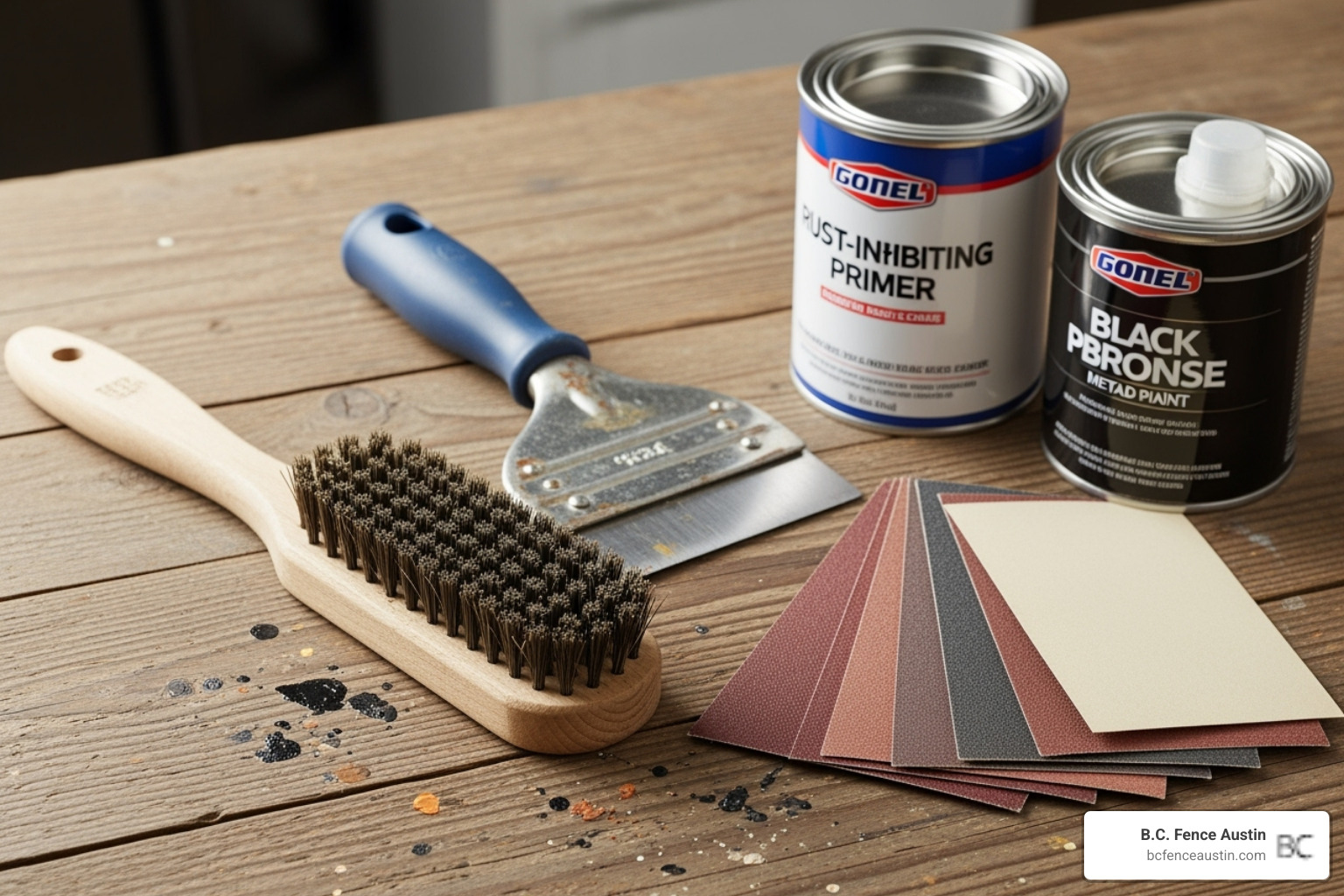
Before you begin, prioritize safety. Always wear protective gear—gloves, safety glasses, and a dust mask are essential, especially when dealing with rust particles, old paint, or chemical removers.
Set up your work area properly. Lay down drop cloths around the fence to protect plants and catch debris, which makes cleanup much easier.
Step 1: Thorough Preparation and Cleaning
Good preparation is the foundation of a successful restoration. Start with a thorough cleaning using mild soap and water. Use a soft-bristled brush to work into decorative curves and corners, and a garden hose to rinse away grime.
Removing dirt and grime is crucial for helping your primer and paint adhere properly. Be sure to protect surrounding plants by covering them with plastic sheeting if needed.
Allowing the fence to dry completely is essential before moving on. Any trapped moisture will cause rust to form under your new finish.
Step 2: Effective Rust and Paint Removal Methods
This step—removing stubborn rust and peeling paint—determines how long your restoration will last.
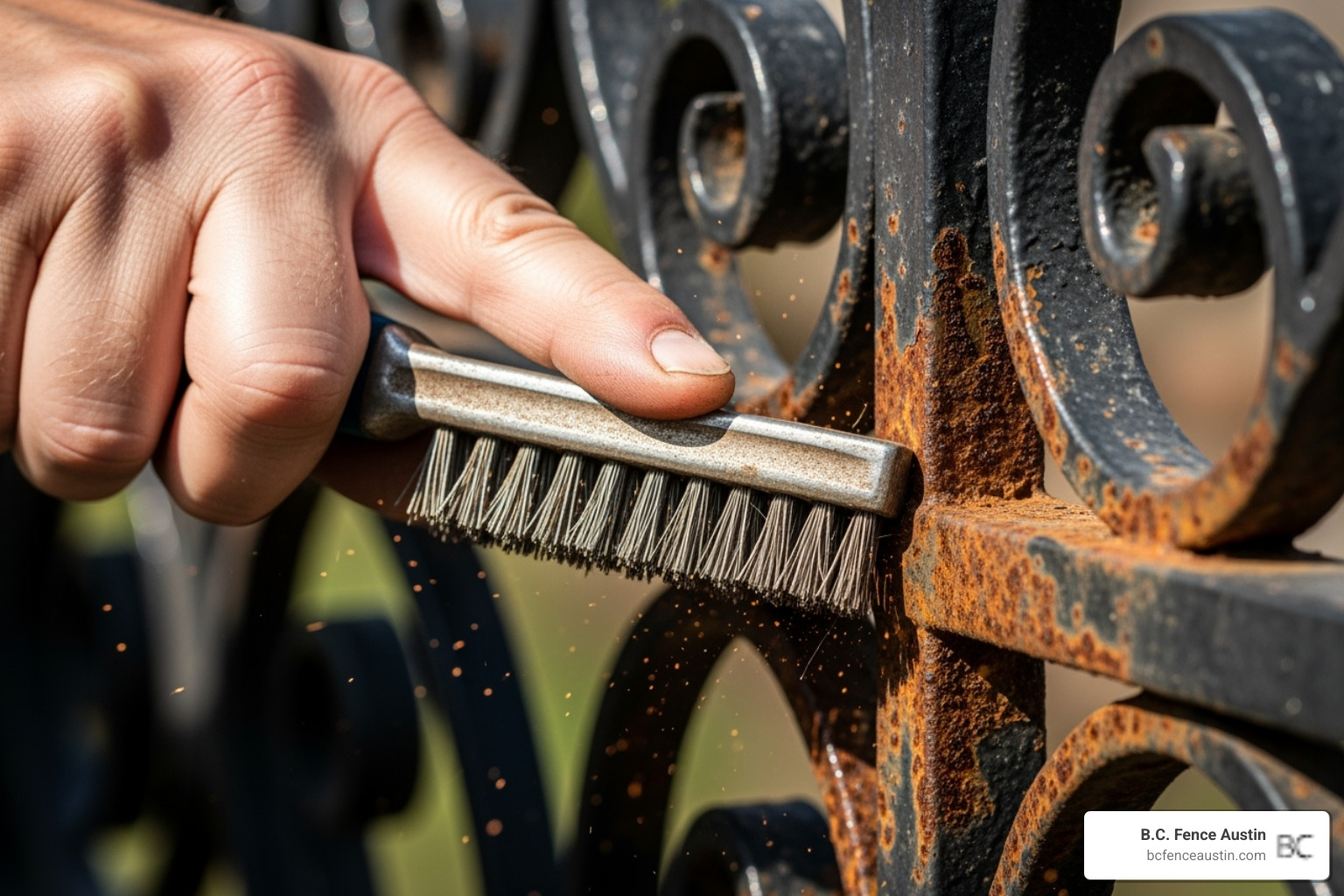
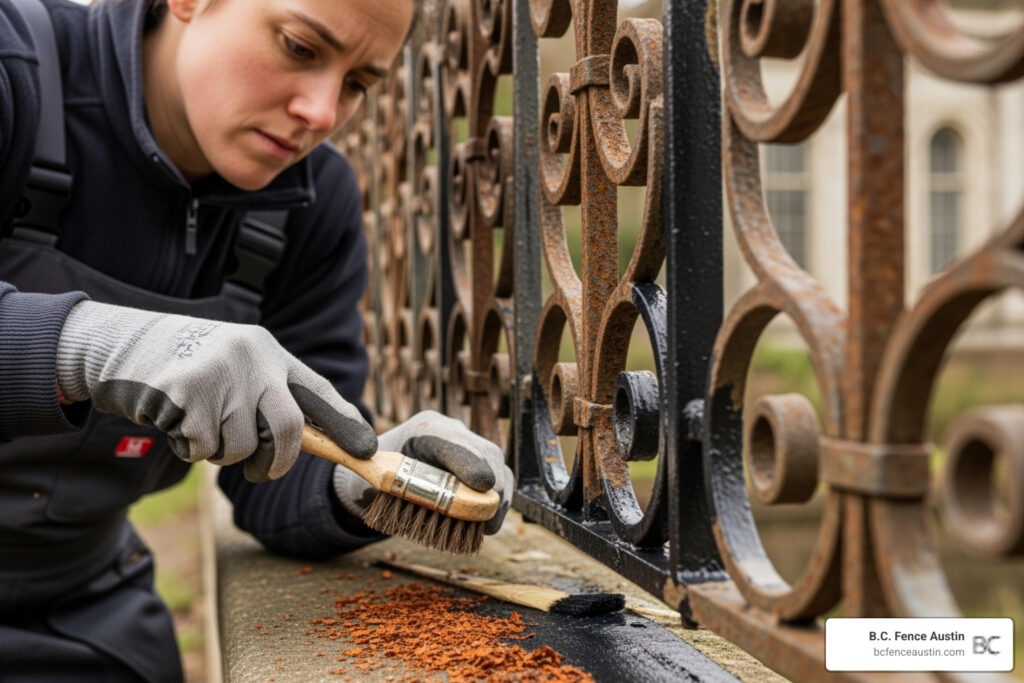
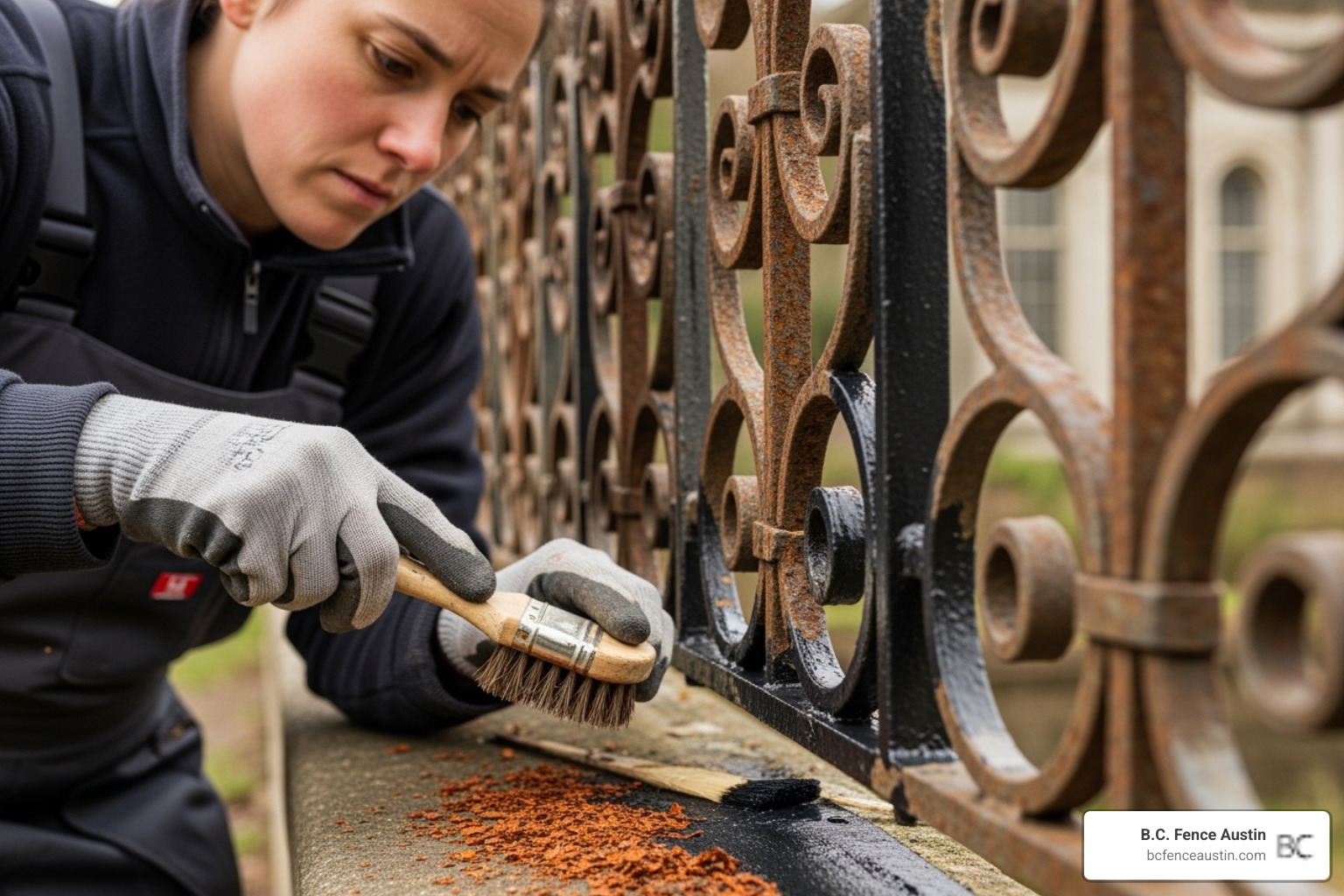
Manual removal is a good starting point. Use a wire brush to scrub away flaking paint and surface rust. For stubborn spots, 150-grit sandpaper works well, and a paint scraper handles large sections of bubbling paint.
For extensive rust, power tools can save time and effort. An angle grinder with a wire wheel attachment removes heavy rust buildup, while a disc sander offers more control for detailed areas.
Chemical rust removers are effective for reaching into tight spaces. These products dissolve rust chemically, but always follow the manufacturer’s instructions and ensure good ventilation.
For natural options to restore wrought iron fence, eco-friendly solutions like a paste of vinegar and lemon juice can tackle smaller rust spots. This method is slower but gentler on the environment.
The goal is to remove all rust. Even a tiny bit left behind will spread under the new finish.
Step 3: Priming and Painting for Lasting Protection
The right primer and paint system will protect your hard work for years. Rust-inhibiting primer is non-negotiable, as it creates a barrier between the metal and moisture. Choose a metal-friendly primer designed for iron and steel.
Apply your primer in thin, even coats—two are better than one thick coat. Let each coat dry completely according to the manufacturer’s instructions.
For the topcoat, oil-based paint is the gold standard for iron fences, as it adheres well and lasts longer outdoors. Look for paints specifically formulated for metal surfaces. Painting with rust-resistant paints ensures your restoration stands up to the elements.
For application, spraying gives smooth, even coverage, while brushing provides more control. Choose based on your fence’s complexity and your comfort level.
Allowing proper drying time between coats ensures professional results. A well-restored fence not only looks fantastic but also helps Secure Your Home in Style with an Iron Fence. With the right approach, your restored fence will be the envy of the neighborhood.
DIY vs. Professional Restoration: Making the Right Choice
So you’ve assessed the damage and understand the restoration process – now comes the big question: should you tackle this project yourself or bring in the professionals? This is one of the most important options to restore wrought iron fence decisions you’ll make, and honestly, there’s no one-size-fits-all answer.
The truth is, both approaches can give you excellent results when matched to the right situation. Let’s break down what each option offers so you can make the choice that’s perfect for your fence, your budget, and your peace of mind.
| Factor | DIY Restoration | Professional Restoration |
|---|---|---|
| Cost | Typically lower, as you only pay for materials and tool rentals. | Higher due to labor, specialized equipment, and expertise, but often a worthwhile investment for a flawless, long-lasting finish. |
| Time | Can be very time-consuming, especially for thorough prep work. Requires significant personal commitment. | Efficiently completed by experienced teams with specialized tools, minimizing disruption to your routine. |
| Skill Level | Requires basic handyman skills, patience, and attention to detail. Learning curves for specific tools or techniques. | Experts possess specialized knowledge and experience, ensuring proper techniques for rust removal, repair (including welding), and application of advanced coatings like powder coating. |
| Equipment | Basic tools like wire brushes, sandpaper, scrapers, paintbrushes, and possibly a drill with wire wheel. May need to rent specialized equipment for larger jobs. | Access to industrial-grade equipment such as sandblasters, commercial-grade rust removers, and spray painting systems that provide superior coverage and durability. |
| Best For | Minor rust spots, flaking paint, small sections, or for those who enjoy hands-on projects and have the time. | Extensive damage, structural repairs (bent posts, broken sections), lead paint concerns, intricate designs, large fences, or when you desire the highest quality, longest-lasting finish with minimal effort on your part. Also ideal for homeowners who prefer not to deal with the mess and complexity of intensive restoration. |
DIY Options to Restore Wrought Iron Fence: A Step-by-Step Guide
If you’re looking at some surface rust, a few flaking paint spots, or maybe just need to touch up a small section, the DIY route might be calling your name. There’s something deeply satisfying about rolling up your sleeves and bringing your fence back to life with your own two hands.
The cost-effectiveness is definitely appealing – you’re only paying for materials and maybe some tool rentals. Plus, if you’re someone who genuinely enjoys hands-on projects and has the time to dedicate to doing it right, this can be a rewarding weekend (or few weekends) project.
DIY restoration works beautifully for minor repairs where you’re not dealing with structural issues or extensive damage. Think of it as giving your fence some much-needed TLC rather than major surgery. The sense of accomplishment you’ll feel when neighbors start complimenting your beautifully restored fence? Absolutely priceless.
Here’s what you’ll need in your DIY toolkit: mild soap and warm water for the initial cleaning, along with wire brushes and sandpaper for rust removal. You’ll also want rust-inhibiting primer and quality metal paint, plus all the essential protective gear – safety glasses, gloves, and a good respirator mask. Don’t forget drop cloths to protect your landscaping and clean rags for wiping down surfaces between steps.
The key to DIY success is patience and thoroughness. Rush the prep work, and you’ll see those rust spots creeping back within a year or two. Take your time, and you’ll have a fence that looks professionally done.
Professional Options to Restore Wrought Iron Fence: When to Call the Experts
Sometimes, despite our best DIY intentions, a fence needs more help than we can realistically provide. If you’re dealing with extensive damage, structural repairs, or lead paint concerns (especially common in pre-1978 fences), it’s time to call in the cavalry.
Professional restoration really shines when your fence needs welding to repair broken sections or bent posts. This isn’t just about aesthetics – it’s about safety and structural integrity. One poorly executed weld could compromise your entire fence’s stability.
Then there’s sandblasting – a game-changing technique that strips your fence down to bare metal more effectively than any amount of hand scrubbing ever could. It’s like giving your fence a complete fresh start, but it requires specialized equipment and expertise to do safely.
Powder coating is another professional advantage that’s simply impossible to replicate at home. This process creates an incredibly durable, chip-resistant finish that can last decades with proper care. The fence essentially gets baked in a specialized oven, creating a bond that’s far superior to traditional paint.
Perhaps most importantly, professionals bring the experience to spot potential problems before they become major headaches. They know which primer works best in Austin’s climate, how to handle intricate decorative elements without damage, and how to ensure a flawless, long-lasting finish that adds real value to your property.
When you want the job done right the first time, without the weekend commitment and potential for costly mistakes, our experienced team of Fence Contractors Austin has the tools, knowledge, and dedication to make your fence look absolutely stunning.
Understanding Your Fence: Restoration for Different “Wrought Iron” Materials
Here’s something that might surprise you: that beautiful “wrought iron” fence in your yard might not actually be made of wrought iron at all! When we talk about options to restore wrought iron fence, we need to first understand what we’re really working with.
Most modern fences that have that classic ornate look are actually made from different materials – each requiring its own restoration approach. Think of it like treating different skin types – what works for one might not work for another.
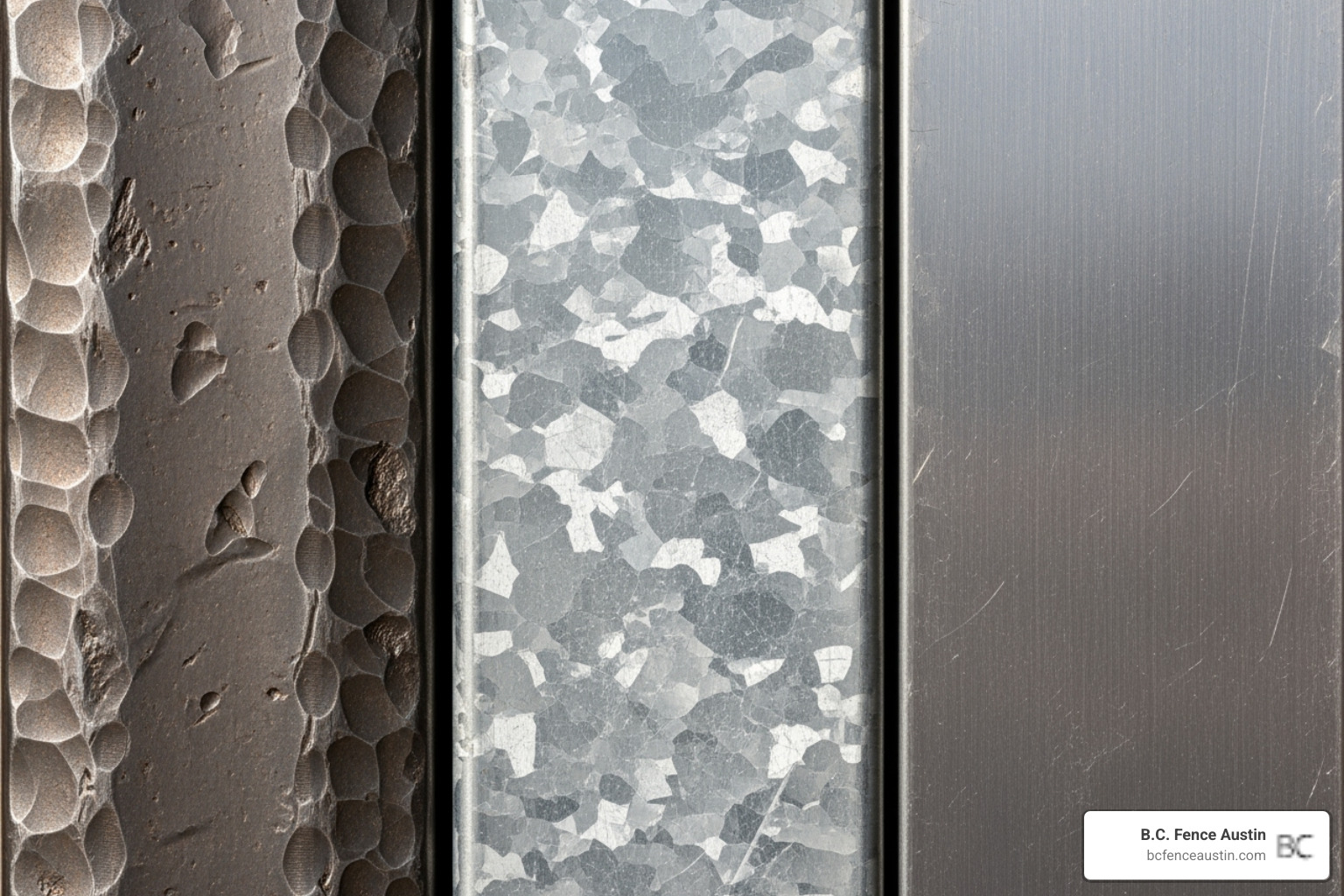
The good news? Once you know what material you’re dealing with, choosing the right restoration method becomes much clearer. Let’s break down the three main types you’ll encounter.
True Wrought Iron vs. Modern Steel and Aluminum
True wrought iron is the original deal – the material that gave these fences their legendary reputation. Made from iron ore that was literally hammered into shape (with slag inclusions that create those characteristic grain patterns), it’s incredibly strong and undeniably beautiful.
But here’s the catch: true wrought iron is highly susceptible to rust. We’re talking about a material that needs regular attention to stay in good shape. If you’ve got authentic wrought iron, you’ll need to stay on top of maintenance because rust doesn’t just affect appearance – it can actually compromise the fence’s strength over time.
Galvanized steel is what most modern “wrought iron” fences are actually made from. Galvanization is the process of coating steel or iron with a layer of zinc to prevent corrosion, and it’s pretty clever – the zinc acts like a bodyguard, sacrificing itself to protect the steel underneath.
The tricky part comes when that protective zinc coating gets compromised. Maybe a rock chipped it, or heat from welding burned it off. Once that happens, the underlying steel becomes vulnerable to rust. The silver lining? It typically rusts slower than true wrought iron, giving you more time to catch and address problems.
Aluminum fencing is the low-maintenance champion of the group. Here’s why aluminum is different: it doesn’t rust at all. Instead, when aluminum meets air, it forms a protective aluminum oxide layer that actually prevents further corrosion. It’s like the material has its own built-in shield.
This means your restoration focus shifts from fighting rust to maintaining appearance. Aluminum is also surprisingly lightweight yet durable, making it easier to work with during repairs.
Understanding your fence material completely changes your options to restore wrought iron fence. For true wrought iron, you might need aggressive rust removal techniques and frequent maintenance. For galvanized steel, you’ll focus on protecting compromised areas and addressing any rust spots. For aluminum, it’s mostly about keeping things looking fresh with cleaning and touch-up painting.
Not sure which material you have? Our team at Wrought Iron Fences can help you identify your fence material and recommend the best restoration approach for your specific situation.
Frequently Asked Questions about Wrought Iron Fence Restoration
When homeowners reach out to us about their aging fences, we hear the same thoughtful questions time and again. These questions show how much people care about making smart decisions when choosing the best options to restore wrought iron fence. Let’s explore the answers that can help you feel confident about your restoration journey.
How often should I inspect my wrought iron fence?
Think of fence inspection like getting a regular checkup at the doctor – at least twice a year is your sweet spot for catching problems early. We typically recommend spring and fall inspections, when you can easily spot any damage that winter weather or summer storms might have caused.
Here’s the thing about fence problems: they love to hide until they become expensive headaches. A tiny rust spot in April can turn into a major structural issue by October if left unchecked. That’s why we also suggest giving your fence a thorough look-over after any severe weather events – heavy storms, hail, or those Texas winds that seem to come out of nowhere.
Early detection is your wallet’s best friend. When you catch rust spots or paint failure in their early stages, you’re looking at simple touch-ups rather than major restoration work. It’s like fixing a small leak before it floods your basement!
What are the best paints and primers for a wrought iron fence?
The secret to a long-lasting restoration lies in building a proper defense system for your fence. Think of it as dressing your fence for battle against the elements – you need the right armor.
Rust-inhibiting primers are absolutely non-negotiable. These specialized primers don’t just sit on top of your metal like regular paint; they actually bond with it and create a moisture barrier that stops rust before it starts. Some homeowners ask about Direct-to-Metal (DTM) coatings that promise to combine primer and paint in one step, but we’ve found that a dedicated primer layer gives you the most reliable protection.
For the topcoat, oil-based paints formulated for metal are your best bet. They’re tougher than a two-dollar steak and handle our Austin weather like champions. If you prefer working with water-based products, acrylic latex paints designed specifically for metal can also deliver excellent results, especially the newer formulations that offer great flexibility and color retention.
The magic happens in the multi-layer system – primer, then at least two coats of quality paint. This isn’t just about looking good (though it certainly does that); it’s about creating multiple barriers between your fence and everything Mother Nature throws at it.
How can I protect my restored fence long-term?
Once you’ve invested time and effort into restoring your fence, protecting that investment becomes the name of the game. The good news? Most maintenance is surprisingly simple and doesn’t require any special skills.
Regular cleaning might sound basic, but it’s incredibly effective. A gentle wash with mild soap and water two or three times a year removes the dirt, pollen, and environmental pollutants that can gradually break down your protective coatings. Just remember to let everything dry completely afterward – water spots aren’t just ugly, they can actually trap moisture against your fence.
Here’s a pro tip that many homeowners don’t know: applying a protective carnauba wax coat annually adds an extra shield against moisture and UV rays. It’s like sunscreen for your fence, and it gives the metal a beautiful, subtle shine that makes your property look professionally maintained.
The touch-up game is where you really protect your investment. Keep a small can of matching rust-resistant paint handy, and fix any nicks or scratches as soon as you spot them. Even tiny imperfections can become rust highways if moisture gets through to the bare metal. A five-minute touch-up job today can prevent a major repair project next year.
Finally, don’t let your landscaping work against you. Keep vegetation trimmed away from the fence line, especially at ground level where posts meet soil. Plants might look pretty growing up against your fence, but they trap moisture and create perfect conditions for rust to develop. A little space between your fence and your greenery keeps both looking their best.
These simple habits will help ensure that your restored fence continues to improve your property’s beauty and security for many years to come. The best options to restore wrought iron fence include not just the initial restoration work, but also the ongoing care that keeps it looking fantastic.
Secure the Beauty and Strength of Your Fence for Years to Come
Your wrought iron fence tells a story – one of elegance, security, and timeless appeal. When you choose the right options to restore wrought iron fence, you’re not just fixing rust spots or touching up paint. You’re preserving a piece of your property’s character while making a smart investment in your home’s future.
The change is remarkable. What once looked tired and weathered becomes a stunning focal point that catches every neighbor’s eye. Your restored fence doesn’t just look better – it works better too. Increased property value is one of the most immediate benefits you’ll see. Real estate experts consistently note that well-maintained fencing, especially classic wrought iron, adds significant curb appeal and market value.
But the benefits go beyond dollars and cents. Improved security and style work hand in hand to create the perfect balance of function and beauty. Your fence becomes a reliable guardian of your property while maintaining that sophisticated look that never goes out of style.
Long-term protection is perhaps the most valuable outcome of proper restoration. When you invest time and effort in thorough rust removal, quality priming, and durable paint application, you’re essentially giving your fence armor against the elements. This means fewer repairs, less maintenance, and more years of enjoying your beautiful boundary.
The expertise of our team at B.C. Fence Austin makes all the difference when you need professional results. We understand that every fence has its own story and unique restoration needs. Whether your fence needs minor touch-ups or complete structural repairs, we bring the knowledge and tools to bring it back to life.
For professional assessment and restoration of your iron fence, contact our team today. We’re here to help you secure the beauty and strength of your fence for years to come, serving Austin and surrounding areas with the care and craftsmanship your property deserves.