Ultimate Checklist for Buying Bull Panels Online
Why Bull Panels Are Essential for Safe Livestock Containment
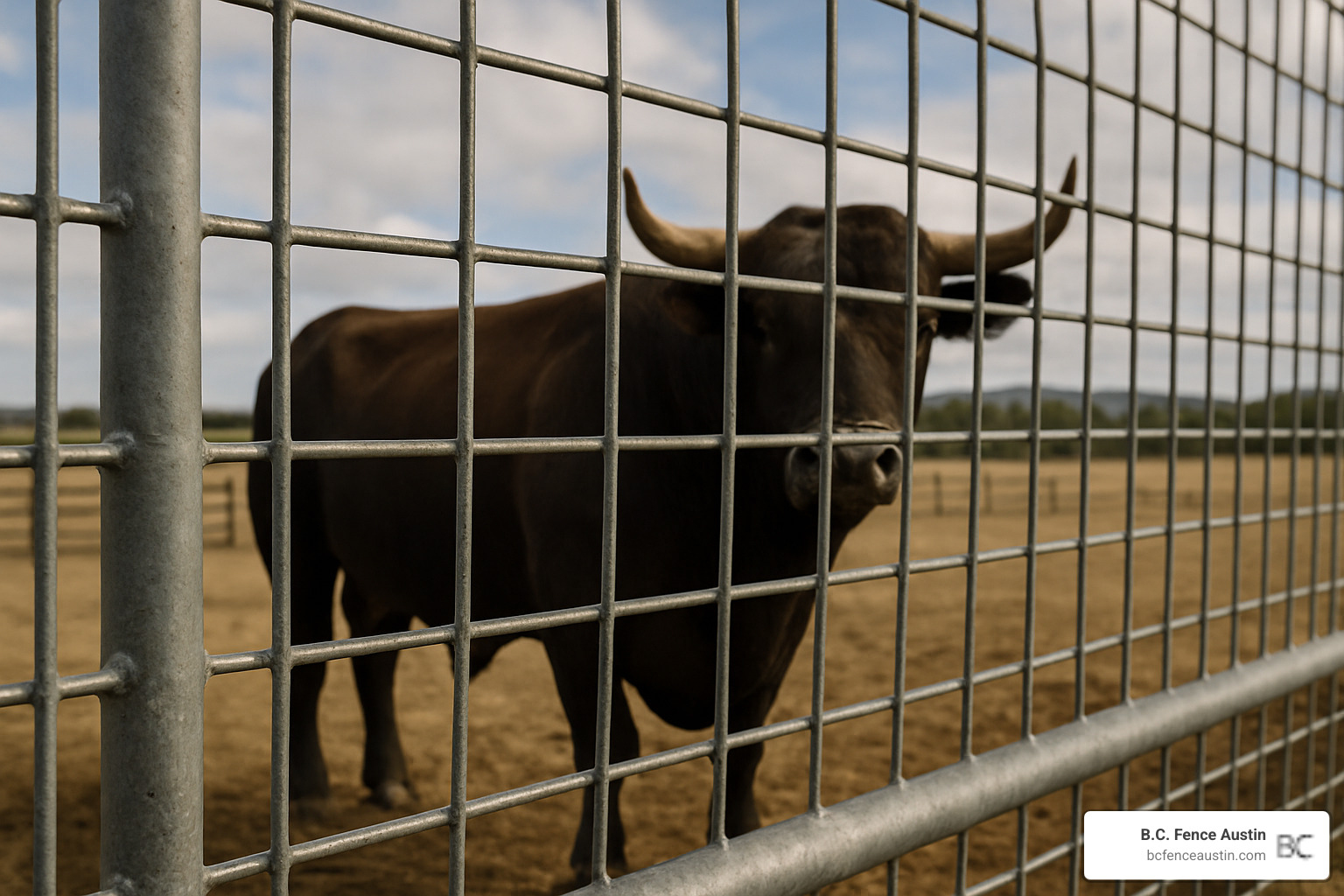
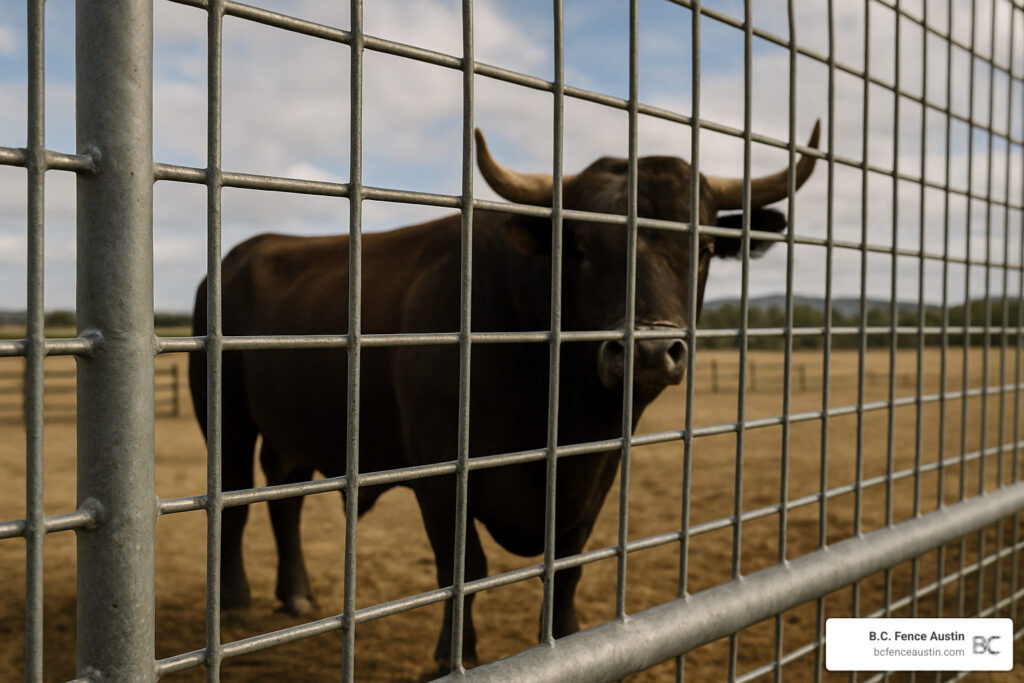
Bull panels are heavy-duty welded wire livestock panels specifically engineered to contain large, powerful animals like bulls and mature cattle. Here’s what makes them different from standard cattle panels:
Key Features:
- Height: 60-72 inches (vs 48-50 inches for standard panels)
- Wire gauge: 1-gauge heavy steel wire (.283″ diameter)
- Mesh spacing: 6″ x 6″ to prevent animals from going through or over
- Weight: 82-210 lbs per 16-foot panel
- Construction: Galvanized-before-welding for maximum rust resistance
Primary uses: Bullpens, corrals, chutes, perimeter fencing, and rodeo arenas where containment strength is critical.
Modern cattle breeds have grown taller than previous generations, making the extra height of bull panels necessary for safe containment. When buying bull panels online, you’re investing in livestock safety and handler protection while lasting decades with proper installation.
Bull panels vocab to learn:
Bull Panels 101: Definition, Specs & Key Differences
Bull panels are heavy-duty welded wire livestock panels built to contain the most powerful animals on your ranch. Unlike standard cattle panels that use 4-gauge or 6-gauge wire and stand 48-50 inches tall, bull panels use thick 1-gauge wire and tower at 60-72 inches.
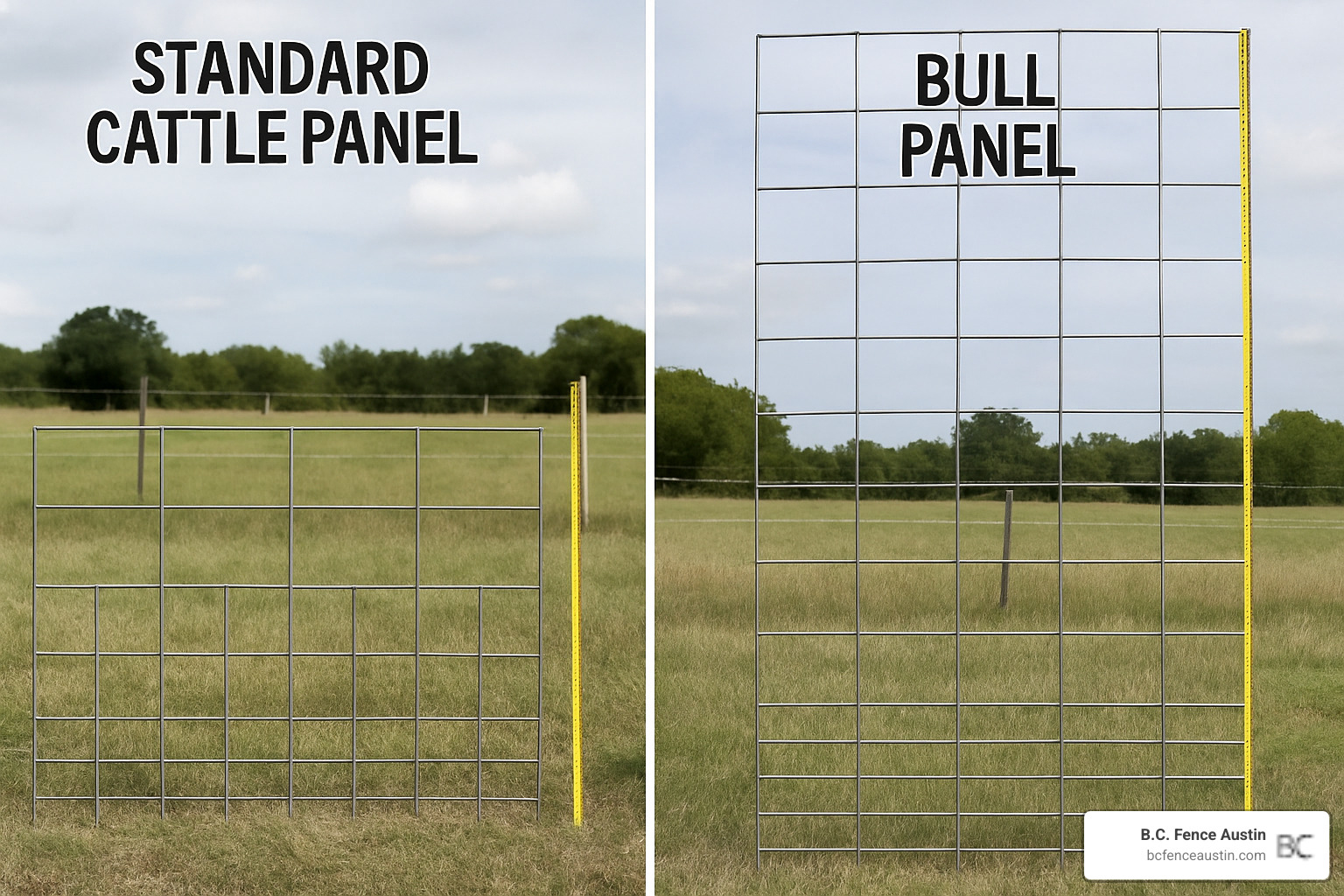
What are bull panels and how do they differ?
Unlike pipe corral panels that use horizontal rails, bull panels feature welded wire mesh construction. This design provides better visibility through the panels and prevents animals from getting their heads stuck between rails, reducing injuries and vet bills.
The mesh strength is what really sets these panels apart. As one experienced rancher put it: “Would never buy corral panels again for cattle; prefers conventional fencing or galvanized bull panels.”
Core specifications every buyer should know
Standard dimensions are consistent across manufacturers. Most panels come in 16-foot lengths with heights ranging from 60-72 inches. Weight ranges from 82 pounds for basic panels up to 210 pounds for heavy-duty versions.
Wire specifications: Primary wire uses 1-gauge steel (.283 inches diameter), frame tubing uses 13-14 gauge steel, and mesh spacing is 6 inches by 6 inches.
| Panel Type | Height | Wire Gauge | Weight | Best For |
|---|---|---|---|---|
| Standard Cattle | 48-50″ | 4-6 gauge | 45-60 lbs | Calves, steers |
| Bull Panels | 60″ | 1 gauge | 82 lbs | Bulls, mature cattle |
| Super Classic | 70-72″ | 1 gauge | 85-95 lbs | Tall modern breeds |
| Heavy Duty | 72″ | 1 gauge | 175-210 lbs | Rough stock, rodeo |
Why choose bull panels for large livestock?
Bull panels solve three critical problems: Height containment for today’s taller cattle breeds, strength requirements that distribute force across the entire panel, and injury prevention through proper mesh spacing that prevents animals from getting caught.
Real rancher experiences tell the story best. One rancher shared how his Mini Jersey bull “scratched panels into a C-shape within three months” when using standard panels. After upgrading to proper bull panels, those problems disappeared completely.
Material & Construction Checklist for Premium Bull Panels
When shopping for bull panels, the difference between premium and budget options determines whether your panels will still be standing strong after years of bull encounters.
Heavy-duty steel & protective finishes
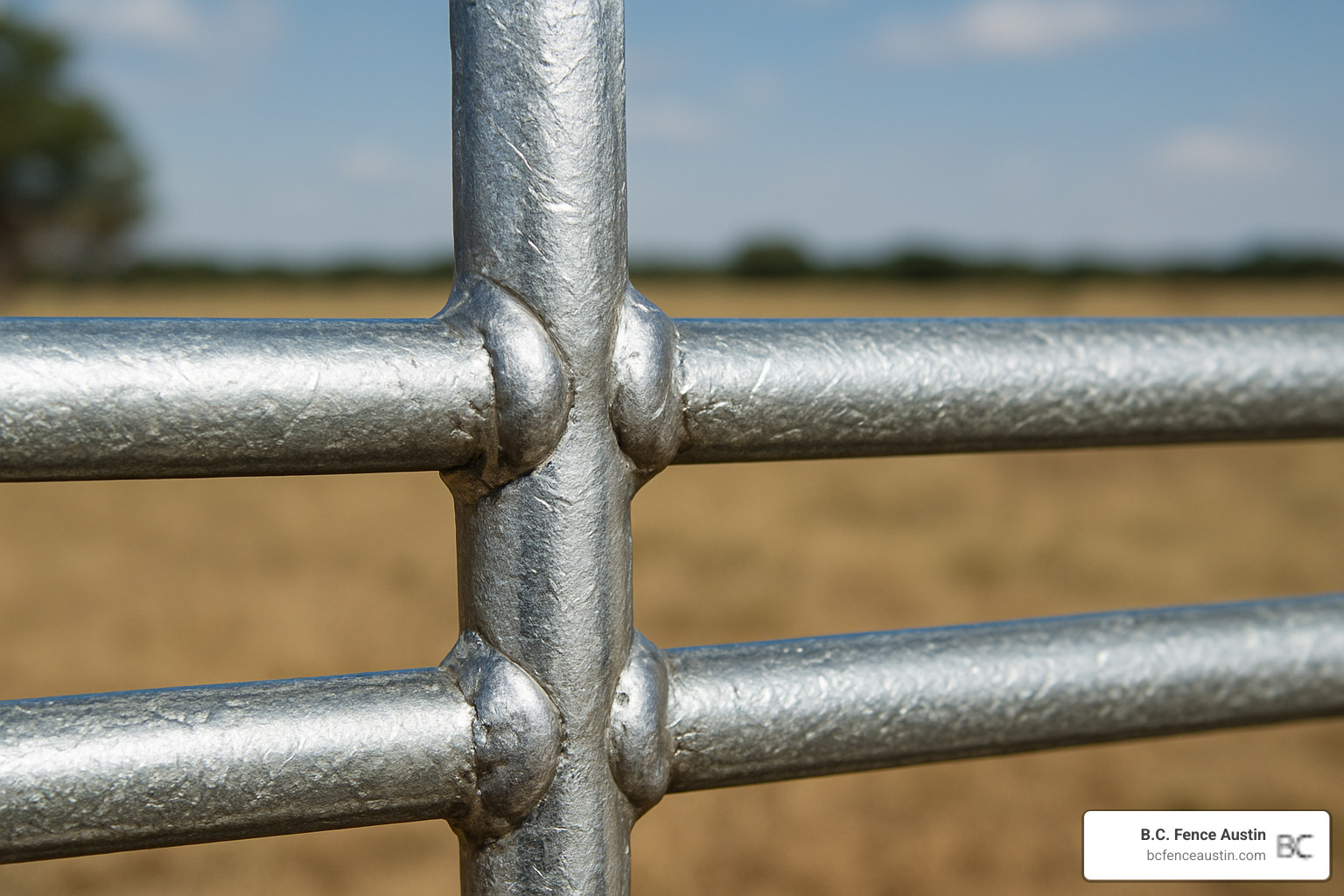
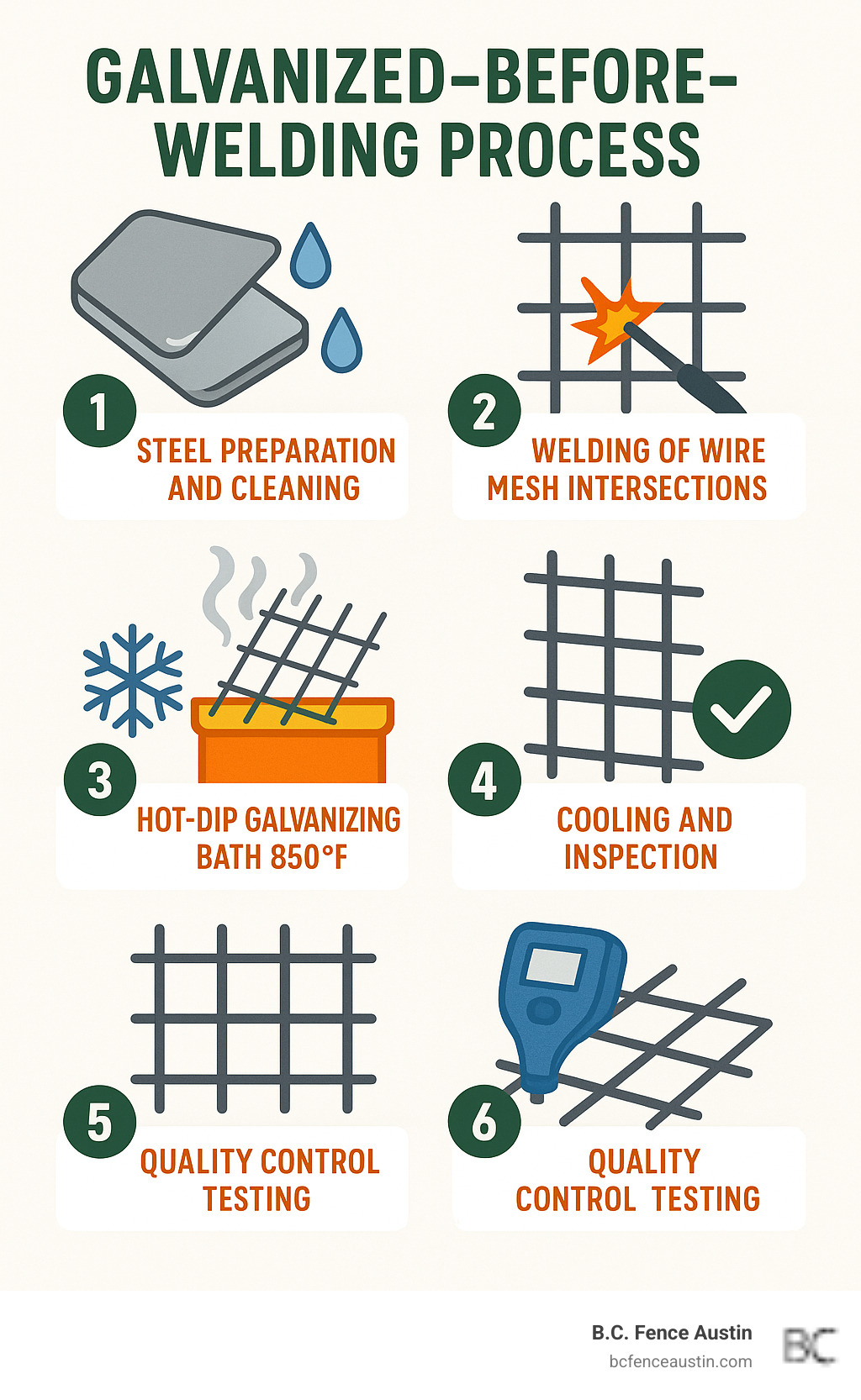
Look for panels built with 1-gauge wire (.283 inches diameter) and 13-14 gauge steel tubing frames. Premium bull panels use “galvanized-before-welding” construction, where each piece gets zinc coating before welding, not after.
When panels are galvanized after welding, the zinc coating can be thin at weld points where rust starts. Galvanized-before-welding provides complete protection at every intersection. Some manufacturers add powder coating over galvanizing for extra protection and appearance.
Welded intersections & vertical stays
Strength comes from having every wire intersection properly welded together. Cheaper panels might use clips or twisted connections that create weak spots under pressure.
Look for welded construction at every intersection with square or rectangular tubing frames and pentagonal shaped horizontal rails. A 16-foot panel should have at least three vertical stays to prevent bowing over time.
Add-on features that extend lifespan
Premium features include panel clips for secure connections, chain connectors for uneven ground, and slam latches for gates. Elite bull panels often come with lifetime warranties versus 5-year coverage for standard panels.
For detailed information about selecting the right panels, check out our guide on what are the best livestock panels.
Sizing, Strength & Cost Comparisons
Finding the right size bull panels means matching your specific needs with your budget while keeping livestock safe.
Matching dimensions to your application
60-inch panels work for most mature bulls and standard operations. 70-72 inch panels suit taller breeds or high-stress situations. For rough stock arenas, 72-inch heavy-duty panels are required for safety.
16-foot panels are standard and most economical per linear foot. 8-10 foot panels work in tight spaces and are easier to handle. When planning bullpens, allow 150-200 square feet per bull. Chutes and alleyways require 72-inch height for safety, with 26-30 inch width for single-file movement.
Strength vs budget: When to upgrade to elite panels
Invest in heavy-duty panels for breeding bulls, aggressive animals, or permanent installations lasting 20+ years. Rough stock and rodeo facilities require premium panels for safety. Standard bull panels work fine for temporary containment or calm, well-trained cattle.
Example: PB10T heavy-duty panels weigh 175-210 pounds versus standard 82-pound panels, offering significantly more strength but doubling the cost.
Installation & Maintenance Best Practices for Bull Panels
Proper installation creates a system that keeps livestock safe for decades. Even the strongest panels will fail if you cut corners during installation.
Installing bull panels step-by-step
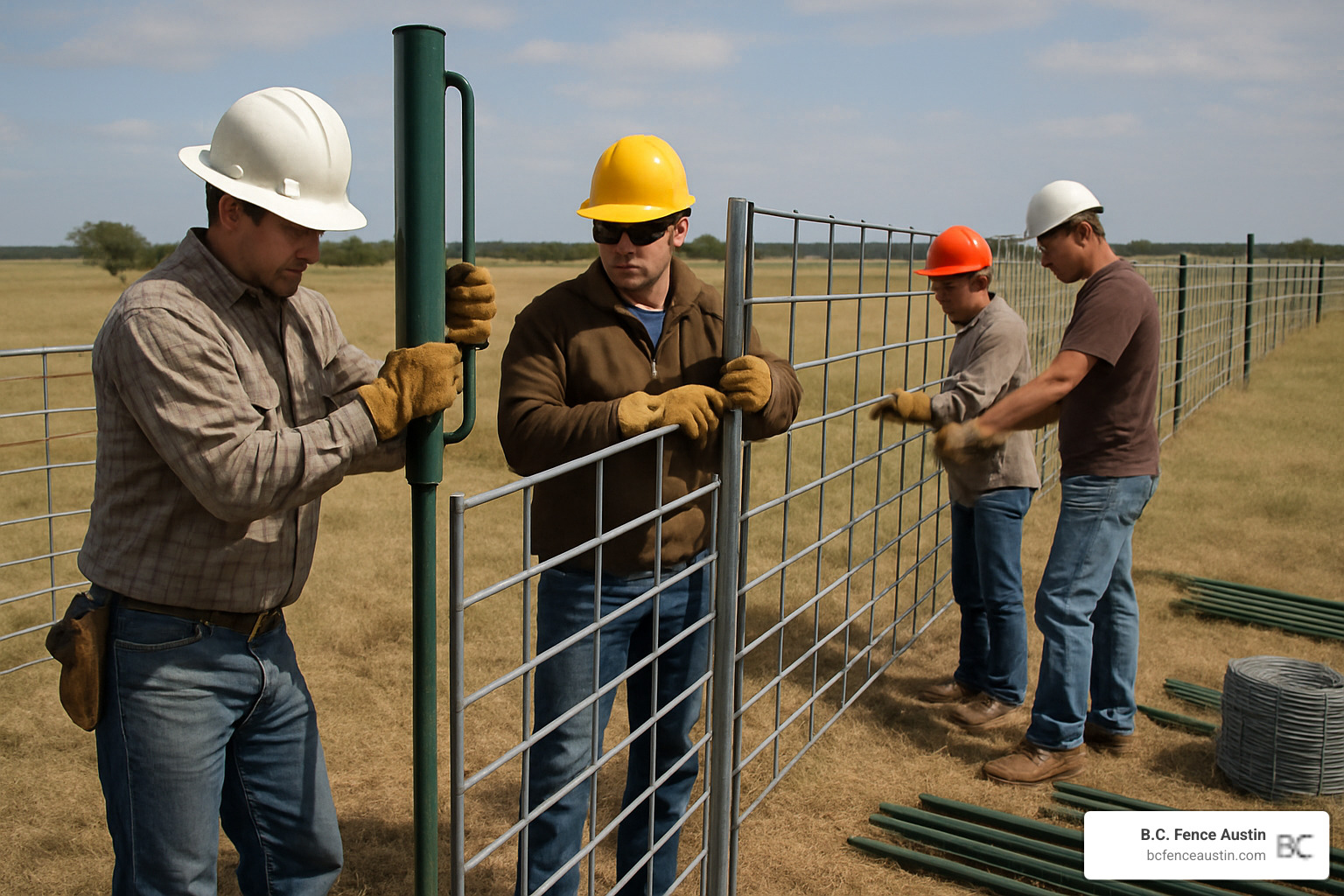
Plan your layout carefully and mark post locations. Posts should never exceed 8-10 feet apart for bull panels. Corner bracing is critical – use 6″x6″ wood posts minimum for corners and 4″x6″ for line posts. For steel T-posts, use at least 2.5″ wide driven 24-30 inches deep.
Set posts in concrete for permanent installations. Use proper panel clips or connectors and maintain 2-4 inches of ground clearance. Tension panels properly – taut but not over-tensioned to avoid stressing connection points.
Common maintenance issues & fixes
The most common issue is rust starting at scratches. Touch up damaged galvanizing promptly with galvanizing spray. Bent mesh from energetic livestock can often be straightened, but severe damage requires panel replacement.
Check and retighten loose connections annually. If posts start moving, reset immediately. Many ranchers add an offset hot wire to discourage constant pressure against panels, extending panel life significantly.
Enhancing durability after install
Annual washing removes corrosive materials that eat away galvanizing. Check ground clearance as soil settles and adjust as needed. Install rubber strips on gates where metal touches metal.
Set up inspection schedules: monthly checks for loose connections, quarterly inspections of welds and galvanizing, and comprehensive annual reviews of post stability.
For comprehensive installation information, visit our guide on cattle panel fence design.
Buying Bull Panels Online: A Step-by-Step Guide
Shopping for bull panels online can save time and money, but requires knowing exactly what you’re getting before delivery.
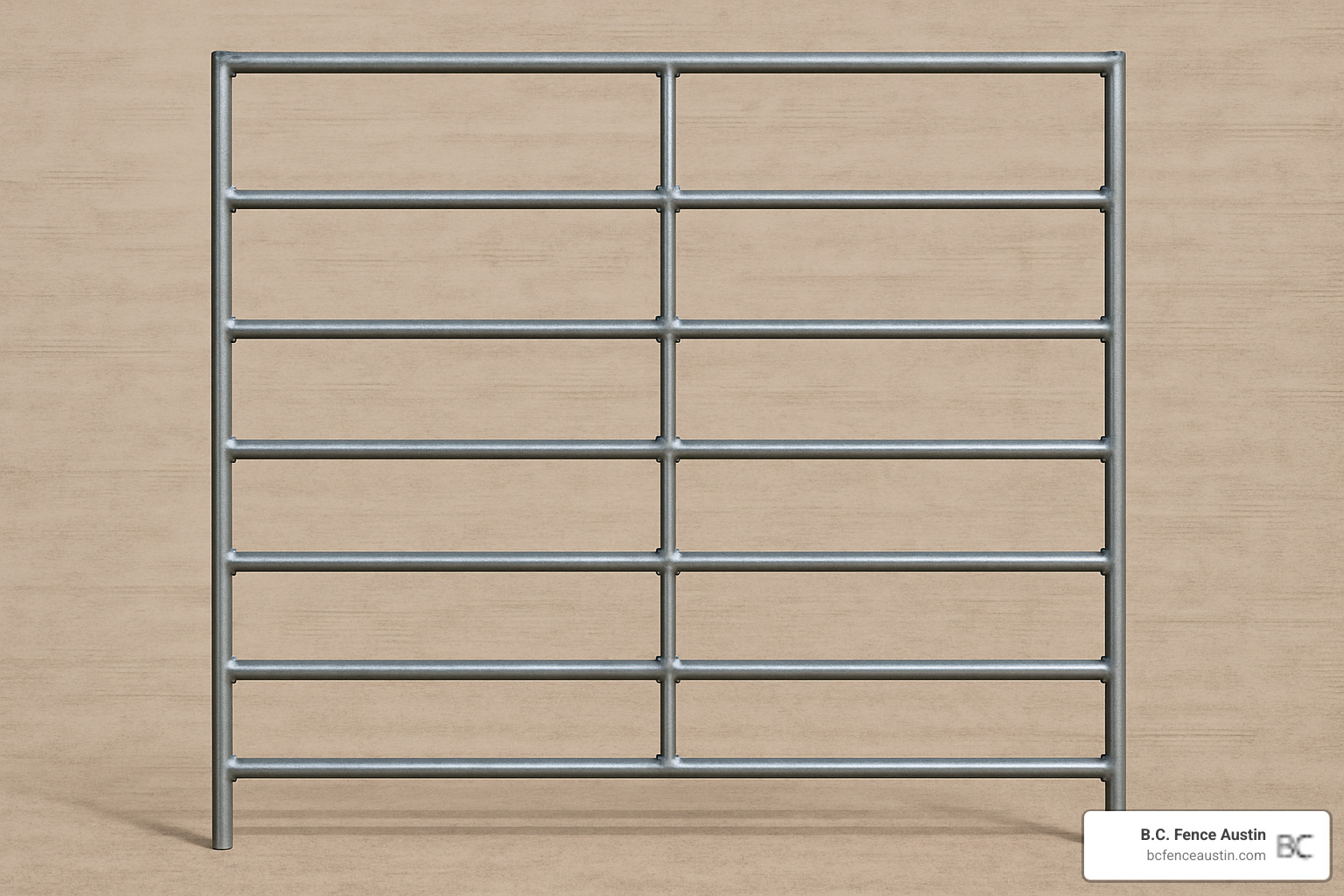
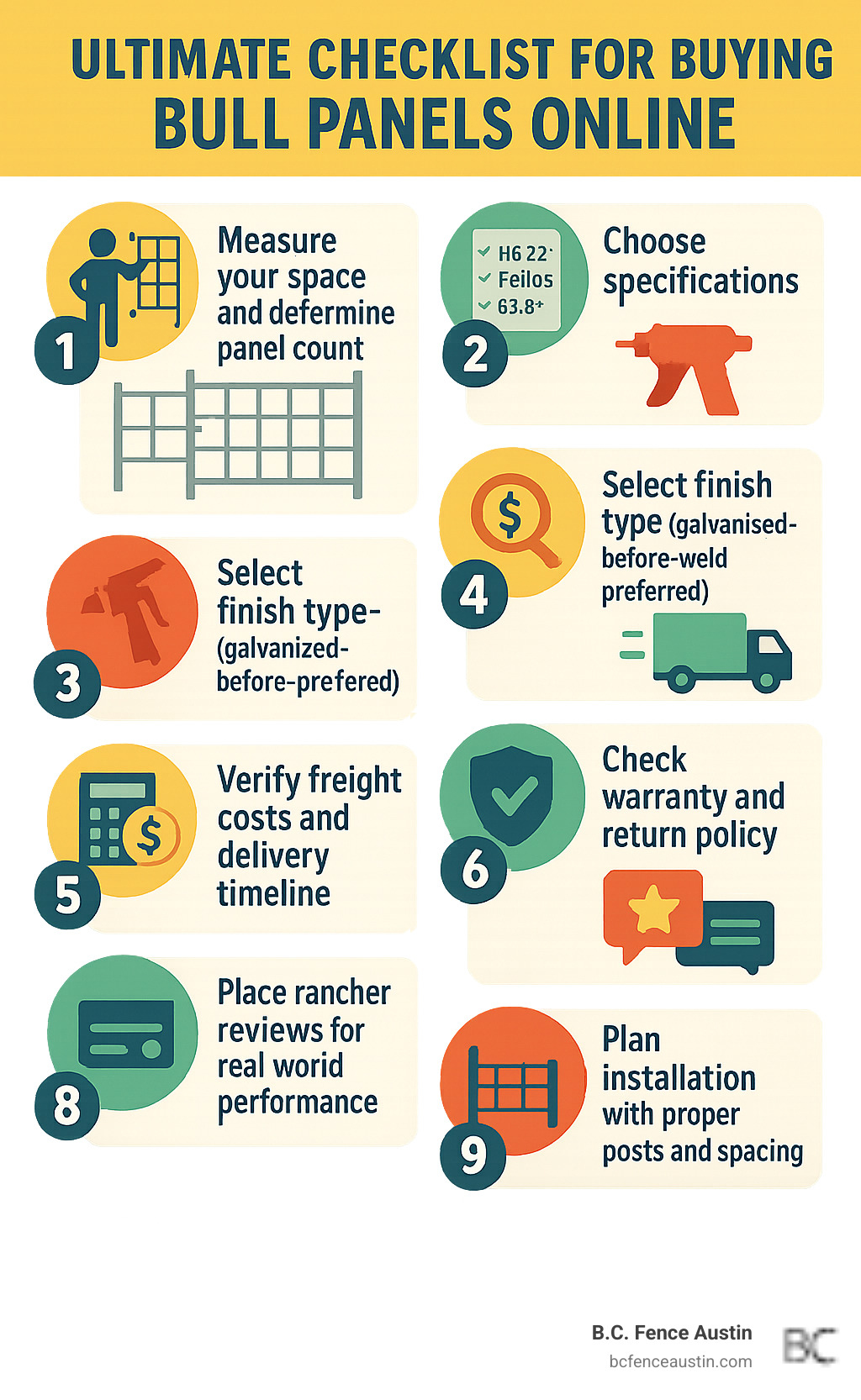
The ultimate online buying checklist for bull panels
Measure your fence line and count exactly how many panels you need, plus extras for repairs. Get specific about specifications – look for 1-gauge wire minimum (.283 inches diameter), 6-inch by 6-inch mesh spacing, and 60-72 inch heights.
Check the finish carefully. Galvanized-before-welding costs more but saves money long-term. Factor freight shipping costs into your budget from the start – panels can weigh over 200 pounds each.
Verify warranty and return policy before buying. Quality bull panels come with warranties, but terms vary widely. Returns are nearly impossible once delivered.
Reading real-world feedback from ranchers
Look for reviews mentioning long-term performance over several seasons. Pay attention to installation stories and watch for recurring complaints about rust or bending under normal use.
Ranchers consistently praise panels “welded at every intersection” that can “hold even buffalo or the most unruly bulls” when properly supported. They warn about economy panels that bend when animals get “impatient for food.”
Avoiding common pitfalls when ordering bull panels online
Avoid mixed specifications – verify every panel matches exactly. Shipping surprises can double costs, so get freight quotes upfront and ensure truck access to your property.
Check connection hardware compatibility if adding to existing fencing. Warranty registration often requires completion within 30 days.
The biggest mistake? Assuming all “bull panels” are equal. Stick to specific measurements rather than trusting product names alone.
Frequently Asked Questions about Bull Panels
How tall should bull panels be for mature bulls?
The height question comes up constantly, and for good reason – get it wrong, and you’ll be chasing bulls down the road. For most mature bulls, 60-inch bull panels provide solid containment that keeps everyone safe and secure.
But here’s the thing about modern cattle: they’re not your grandfather’s cows. Today’s breeds have grown taller than historical averages, which is why we’re seeing more ranchers opt for 70-72 inch panels. As one manufacturer puts it perfectly: “Today’s cattle breeds are taller than ever and need the extra height that the Super Classic provides.”
Your choice really depends on three key factors. Breed characteristics matter tremendously – some breeds are naturally taller and more athletic than others. Bull temperament plays a huge role too; aggressive or excitable bulls will test every inch of your fencing, especially during breeding season when stress levels run high. Finally, consider your installation purpose – breeding pens often need that extra height when hormones are running wild.
That extra 6-10 inches might seem like overkill until you’re dealing with an escape. Trust us, it’s worth the investment for peace of mind.
Can I mix standard cattle panels with bull panels in one corral?
This question makes us a bit nervous, honestly. While you can physically connect different panel types, we strongly advise against mixing standard cattle panels with bull panels in any area where bulls will actually be contained.
Think about it this way: bulls are incredibly smart when it comes to finding weak spots. The strength difference between panel types creates exactly the kind of vulnerability that bulls will find and exploit. It’s like having a chain with one weak link – guess where it’s going to break?
That said, there are some situations where mixing panels works well. You can use bull panels for primary containment while using standard panels for secondary barriers or visual screens. Different height panels can work together nicely for creating transition areas where cattle move from high-security to low-security zones.
The golden rule? Never compromise on strength in your primary containment areas. And always make sure your connectors are compatible between different panel styles – don’t try to jerry-rig connections with wire ties or makeshift hardware.
What post spacing is recommended for bull panel fencing?
Post spacing is where we see a lot of folks cut corners, and it always comes back to bite them. Bull panels are significantly heavier than standard livestock panels, and they need to withstand tremendous forces when bulls decide to test the boundaries.
Here’s what works in the real world: never exceed 16 feet between posts – that’s your absolute maximum, even though it matches the panel length. For optimal performance, we recommend 8-10 foot spacing between posts. This prevents panel sag over time and gives you the support structure needed when a 2,000-pound bull decides to lean into your fencing.
Corner posts deserve special attention – always use heavy-duty posts with adequate bracing. These take the most stress and anchor your entire fence line. Gate posts need even more reinforcement due to the constant swing and latch forces they endure.
For post specifications, go with 6″x6″ wood posts for corners and 4″x6″ line posts at minimum. If you prefer steel T-posts, use 2.5″ width driven 24-30″ deep. We always recommend concrete setting for permanent installations, and remember the old rule: post depth should be at least one-third of the above-ground height.
Here’s something important that many people don’t realize: proper post spacing affects your warranty coverage. Many manufacturers will void warranties if panels fail due to improper installation spacing. Don’t let poor planning cost you coverage when you need it most.
Conclusion
Selecting the right bull panels online comes down to understanding your livestock needs and investing in quality that protects them for years. Your cattle’s safety depends on getting specifications right – don’t compromise on lighter gauge panels or shorter heights to save money.
Quality construction makes the difference in panel longevity. Galvanized-before-welding might seem minor, but it prevents rust through Texas weather. Proper installation is equally critical – even the strongest panels fail without corner bracing or proper post spacing.
Premium panels often cost less over 15-20 years than replacing cheaper ones multiple times, plus provide peace of mind knowing your fencing can handle whatever bulls throw at it.
For folks in the Austin area – from Cedar Park and Leander to Round Rock, Georgetown, and Pflugerville – professional installation eliminates guesswork in getting bull panels set up correctly.
Whether containing gentle milk cows or managing breeding bulls, proper fencing protects your livestock investment while keeping everyone safe. Research your options, read rancher experiences, and choose suppliers who stand behind their products.
For more information about livestock protection, visit our guide on how to protect your livestock with a fence.