
The Price of Protection: Barbed Wire Fencing Cost Breakdown

Finding secure and affordable fencing solutions can be a challenge, but barbed wire fencing cost should not be one of them. Barbed wire fences are primarily used for security and property boundary purposes, making them a popular choice for homeowners like Hannah who value safety and cost-effectiveness.
Here’s a quick breakdown of what you need to know:
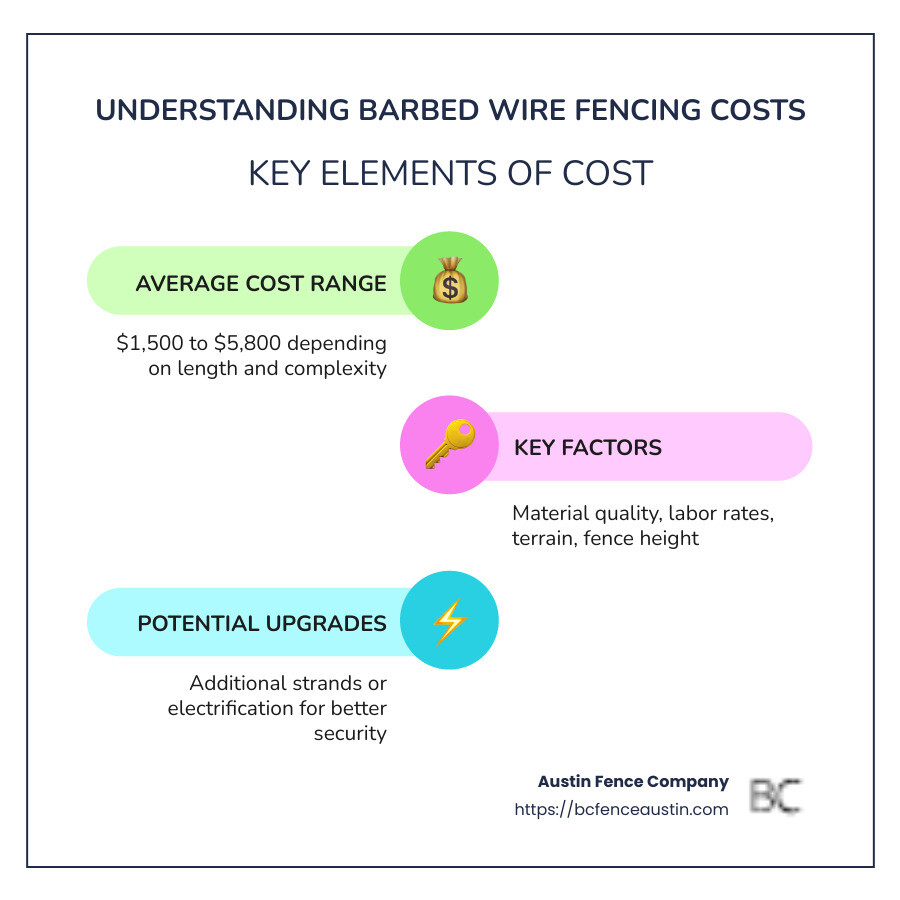
- Average Cost: Depends mostly on the length of the fence and how complex the installation is.
- Key Factors: Material quality, labor rates, property terrain, and fence height.
- Potential Upgrades: Consider additional strands or electrification for improved security.
Barbed wire fences offer a straightforward yet effective way to protect your property, all while keeping costs manageable without compromising on security or durability.
By understanding the cost elements of barbed wire fencing, you can make informed decisions to improve your property within budget, ensuring both peace of mind and aesthetic harmony.
Understanding Barbed Wire Fencing Costs
Barbed wire fencing is a practical choice for those seeking security without breaking the bank. Let’s explore what influences the barbed wire fencing cost and how it compares with other fencing options.
Factors Influencing Barbed Wire Fencing Cost
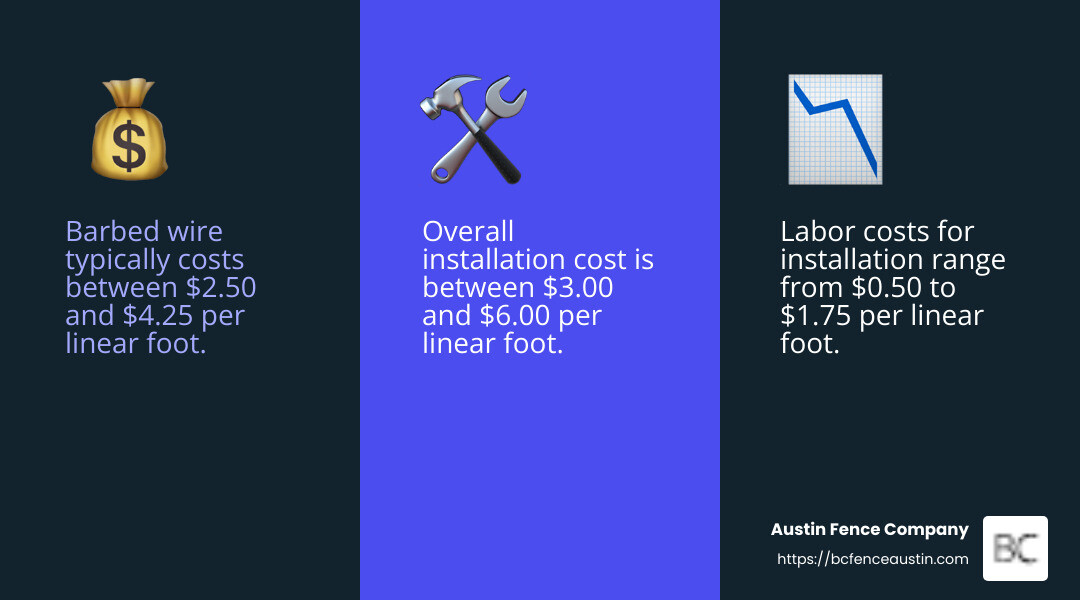
Material Costs: The quality and type of barbed wire significantly impact the cost. Standard barbed wire with posts and hardware is one of the most affordable fencing materials per linear foot. If you opt for higher-quality materials, expect to pay more.
Labor Costs: Labor is another critical factor. It varies with the complexity of the installation and the local labor market.
Installation Costs: The total installation cost combines materials and labor. For a standard 5- to 6-strand barbed wire fence, the number of strands and the length of the run drive the price. Terrain challenges, such as rocky soil or dense vegetation, can increase these costs due to additional preparation work.
Cost Comparison: Barbed Wire vs. Other Fencing Types
Choosing the right fence often comes down to balancing cost with functionality. Here’s how barbed wire stacks up against other common fencing types:
-
Woven Wire: Offers more durability than barbed wire and is ideal for containing smaller livestock. However, it is more expensive, typically costing more per linear foot due to its complex weave and sturdier materials.
-
High-Tensile Wire: This option provides excellent strength and requires less maintenance. Non-electric high-tensile fences cost more upfront due to the need for tension devices and durable posts, but they may save on long-term maintenance costs.
-
Electrified Wire: Adding electrification to a high-tensile fence increases the cost further but offers superior security. This type of fencing is often used for high-security needs and can deter both animals and humans.
In summary, while barbed wire is a cost-effective choice, other fencing types may offer benefits that justify their higher price tags, depending on your specific needs. By understanding these options, you can choose the best fence to fit your budget and requirements.
Barbed Wire Fencing Cost Per Foot and Acre
When considering barbed wire fencing cost, understand how prices vary based on the length of the fence and the size of the area being enclosed. Here’s a breakdown to help you estimate costs effectively.
Estimating Costs for Different Fence Lengths
The cost of installing a barbed wire fence is calculated per linear foot, so the length of the run matters most. Here’s how length changes the picture:
-
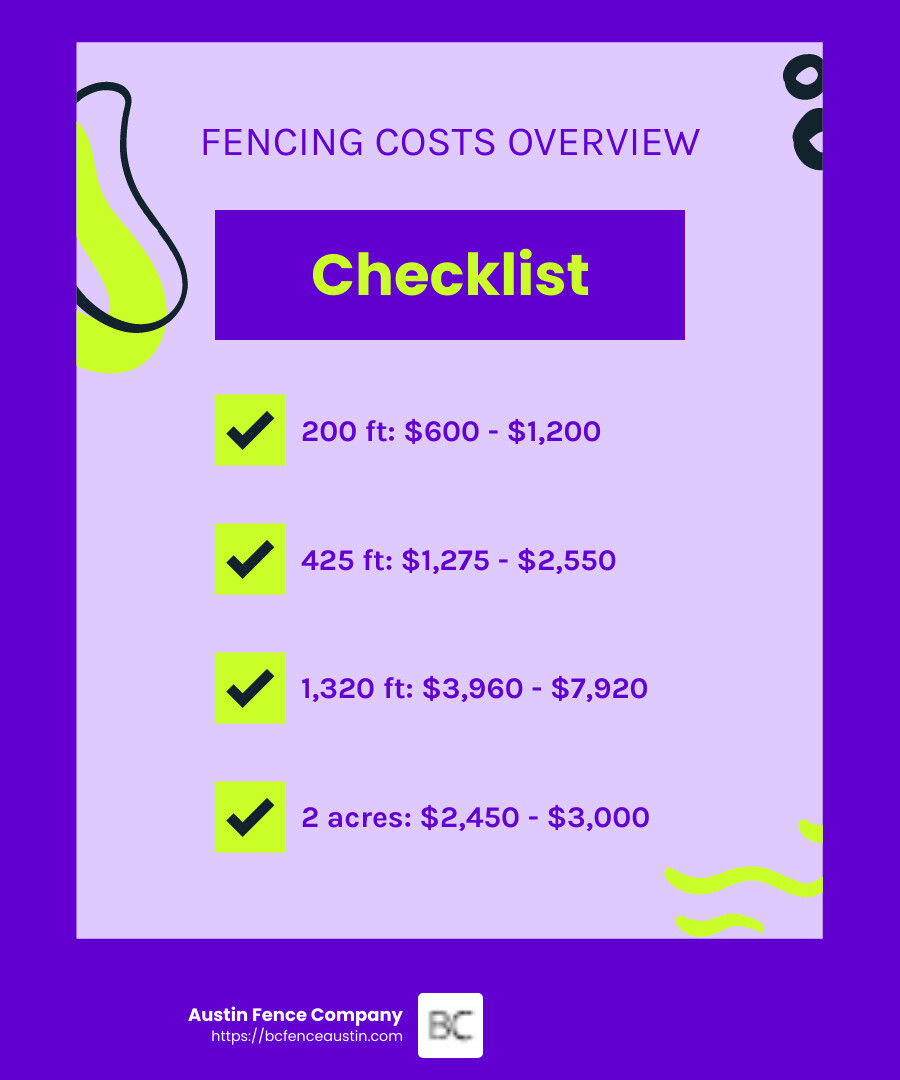
200 feet: A short run like this is the most affordable. The final price depends on factors like the number of wire strands and the terrain.
-
425 feet: This length is common for small to medium-sized properties, and the cost scales with the footage.
-
1,320 feet: This length, equivalent to a quarter-mile, is often used for larger properties or sections of farmland, where per-foot efficiencies start to help.
Calculating Costs for Large Areas
For more extensive properties, costs are often calculated on a per-acre basis. Barbed wire fencing for large areas can be more economical due to bulk pricing:
-
2 acres: Enclosing 2 acres typically requires between 1,200 and 1,300 linear feet of fencing. The cost depends on the terrain and the number of strands used.
-
Large Range Areas: For very large areas, such as ranches or farms, the extensive perimeter and potential extras like terrain preparation make this the biggest fencing investment.
When planning your fencing project, consider the specific needs of your property, such as the number of wire strands and any additional security features. These factors will influence the overall cost and effectiveness of your barbed wire fence.
Legal Considerations for Barbed Wire Fencing
When installing barbed wire fencing, it’s crucial to be aware of legal considerations that can impact your project. Local building codes and ordinances play a significant role in determining where and how you can install these fences.
Where Barbed Wire Fencing is Permitted
Local Building Codes and Ordinances
Before you start your fencing project, check your local building codes. These regulations may dictate the height, placement, and even the type of fencing materials you can use. Some areas have strict rules about barbed wire, especially in residential zones, to ensure safety and maintain neighborhood aesthetics.
Farmland Use
Barbed wire is commonly used on farmland to contain livestock and delineate property boundaries. In these areas, the regulations are often more lenient. However, it’s still essential to verify any specific rules that might apply to agricultural lands in your region.
High-Security Organizations and Government Buildings
High-security facilities, such as military bases, prisons, and certain government buildings, often use barbed wire for added protection. These sites usually have their own set of regulations and standards for fencing. If you’re considering barbed wire for a similar purpose, ensure you meet all necessary security and safety requirements.
By understanding the legal landscape, you can ensure your barbed wire fencing project complies with all relevant laws and regulations, avoiding potential fines or the need for costly modifications. This knowledge helps you make informed decisions that align with both your needs and legal obligations.
Frequently Asked Questions about Barbed Wire Fencing Cost
What is the average cost of barbed wire fencing?
The cost of barbed wire fencing depends on several factors like the length of the fence, the quality of materials, and labor costs. Pricing is usually quoted per linear foot and includes both material and installation. Larger projects might qualify for discounts, especially if you’re fencing multiple acres. For a quote on your property, contact BC Fence.
Can you legally put barbed wire on your fence?
Whether you can legally install barbed wire on your fence largely depends on local building codes and ordinances. These rules vary by location and can dictate where and how barbed wire can be used. In residential areas, there are often more restrictions to ensure safety and maintain the appearance of neighborhoods. However, on farmland, the use of barbed wire is more common and permitted for purposes like containing livestock. It’s also frequently used for security in high-risk areas, such as around government buildings or prisons. Always check with local authorities to ensure compliance with regulations.
How much barbed wire is needed for 2 acres?
To determine how much barbed wire is needed for 2 acres, it’s helpful to consult an acreage chart. On average, a single acre requires between 850 and 900 linear feet of fencing. For 2 acres, you would need approximately 1,200 to 1,300 linear feet of barbed wire. Depending on the number of strands you choose (typically 4 to 6 for livestock), you’ll need to calculate the total length of barbed wire required. Most barbed wire is sold in fence rolls, so knowing the total linear feet will help you purchase the right amount.
Conclusion
Choosing the right fencing solution is crucial for enhancing both the security and aesthetic appeal of your property. At B.C. Fence, we understand the importance of balancing these elements, which is why we offer barbed wire fencing that not only protects but also adds value to your property.
Our barbed wire fences are designed to provide secure fencing solutions for a variety of needs, from safeguarding farmland to securing commercial properties. The rugged durability of barbed wire makes it a practical choice for keeping intruders out while maintaining a classic look that complements your landscape.
Investing in a well-constructed fence can significantly increase your property value. Fences are more than just barriers; they are an extension of your property’s identity. A well-installed fence from B.C. Fence ensures your property is not only secure but also visually appealing. Our expertise in fence installation guarantees that your fencing will stand the test of time, offering you peace of mind.
For those in the Austin area, including Cedar Park, Leander, and Round Rock, B.C. Fence is your go-to for high-quality fencing solutions. We pride ourselves on delivering exceptional service and craftsmanship. Whether you need a new installation or a repair, our team is ready to help you open up the full potential of your property.
Explore our barbed wire fencing services and let us help you find the perfect balance between security and aesthetic appeal.