
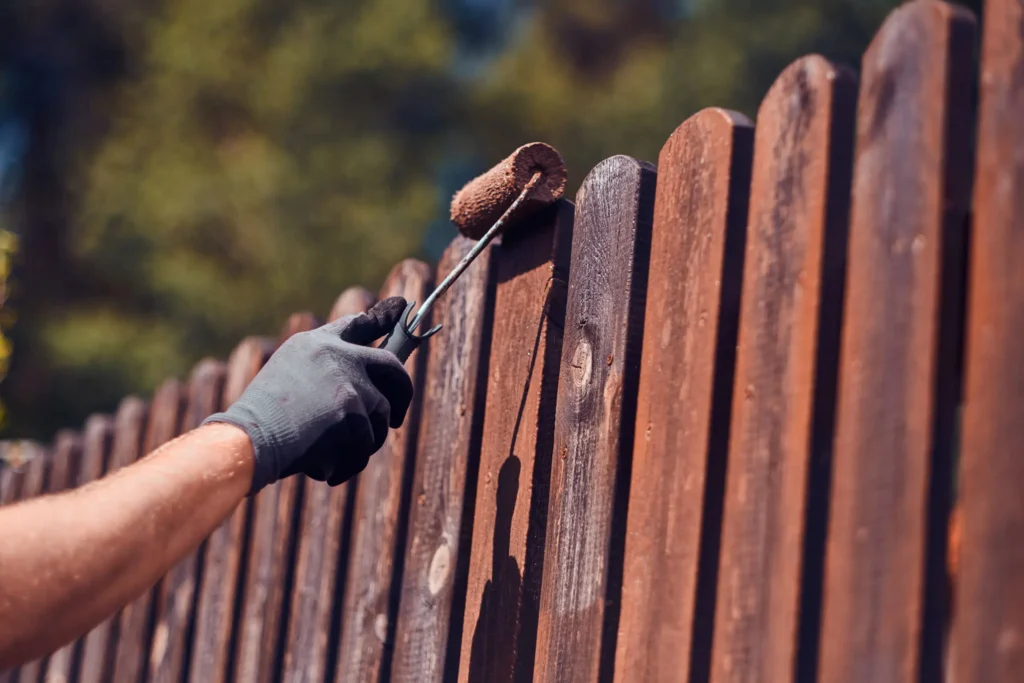
Fence Repair vs. Replacement: The Break-Even Math
Every week, we get a version of the same phone call at B.C. Fence. A homeowner had a rough storm come through. A couple of panels went down. Now they’re getting quotes for a repair, and they want to know if it’s the right move.
Sometimes the answer is yes, and we tell them so. Sometimes it isn’t, and we tell them that too. After nearly thirty years as an Austin fence company building and rebuilding fences across Central Texas, we’ve watched the same pattern play out enough times that we’ve come to trust the math. When repair work costs more than replacement over a three-to-five-year horizon, we say so, even when it costs us a smaller ticket. Here’s how we run the numbers on a homeowner’s behalf, and what determines when repair is honestly the right call.
The First Question We Ask
Before anything else, we walk the line and ask: what percentage of the fence is actually failing?
If the damage is contained to one storm event, one section, one leaning post, the math is simple. Repair it. But if the failures are scattered across the whole run, that’s not damage. That’s a fence at the end of its life telling you so, one panel at a time.
We call it the 30% rule. Any experienced Austin fence company will tell you the same: once about 30 to 40 percent of your posts, rails, or pickets are compromised, the math on repair versus replacement typically flips. Below that threshold, targeted repair is usually the honest recommendation. Above it, homeowners who repair almost always end up rebuilding within three years anyway, having spent more in total than a rebuild would have cost them from the start.
What Post Condition Actually Signals
The reason posts drive the whole decision is simple: they’re the fence’s foundation. Everything above ground follows what they do.
The three failure modes we see most often in Central Texas are rot at the ground line, heaving from clay soil movement, and cracked concrete footings. A single failed post is easy work. Five is manageable. But when ten or more failures appear across a run, we’re not looking at a repair project. We’re looking at an installation that was set at the same time, with the same materials, in the same soil conditions, and it’s reaching end of life together. Repairs bought in that scenario tend to fail in patterns, with new posts giving out within 18 months of each other.
We tell homeowners this straight. It saves them from paying twice for the same fence.
The Break-Even Math
When a repair quote comes in at roughly 60 percent of a full replacement quote, the math almost always favors replacement over a three-to-five-year horizon. Here’s what pushes it that direction:
- Post replacement labor. Setting a new post next to an existing run is slower than setting posts on a fresh install where the crew can dig, set, and line multiple posts at once.
- Cedar picket color matching. Weathered cedar has a color and grain personality that new pickets won’t match for years. Homeowners often replace surrounding sections just so the fence looks unified, and the “small repair” grows.
- Gate cross-bracing and hardware. If gates are involved, the labor to rebuild a gate correctly is nearly the same as installing a new one.
- Removal and haul-away. Removing failing sections isn’t free. On a full replacement, that removal is baked into the quote. On a partial repair, it’s often a line item that surprises homeowners.
- Warranty gaps. Repairs typically carry shorter warranties than new builds. A repair that fails outside its warranty window is money spent for nothing.
Every one of these factors compounds when the fence is aging out. It’s why we run the full math on-site instead of just quoting the visible damage.
When Repair Genuinely Is the Right Call
None of this means repairs are a bad idea. Plenty of situations call for one honestly, and we take those jobs every week.
Isolated storm damage on an otherwise healthy fence is a repair job. So is a single failed post in an otherwise solid run. Gate replacement on a fence with years of life left is a repair job. Cosmetic issues without structural failure, cracked caps, a section that got hit by a lawn mower, a picket bank that faded unevenly, all repairs.
A good fence company Austin homeowners can trust will tell you when repair is genuinely the right call. If we walk your line and the fence has five to seven years left in it, we’ll say so and quote you the repair. We’d rather be the fence company Austin neighbors call back years later than the one that pushed them into work they didn’t need.
The Costs Most Homeowners Don’t Factor In
Even when repair math looks favorable on paper, two costs rarely get counted.
The first is the pattern of repeated repairs. Homeowners who patch a failing fence often pay for a second round of work within 18 months, then a third, then finally rebuild. Adding those bills together almost always exceeds what a single rebuild would have cost from the start.
The second is property value. A fence at the end of its life is a resale liability. Buyers notice, appraisers notice, and inspection reports call it out. Repairs patch the failure, but they don’t reset the remaining lifespan. A rebuilt fence adds real curb appeal and can carry twenty years of runway.
Get the Honest Answer Before You Spend
At B.C. Fence, we’ve been walking Austin fence lines and running this math since 1996. Our free on-site quote isn’t just a number. It’s an assessment of what your fence actually needs, from a targeted repair to a full rebuild. Reach out today and we’ll come out, walk the line with you, and give you the straight-shot recommendation you can actually plan around.